
LED Video Wall Solution for Hospital Command Centers
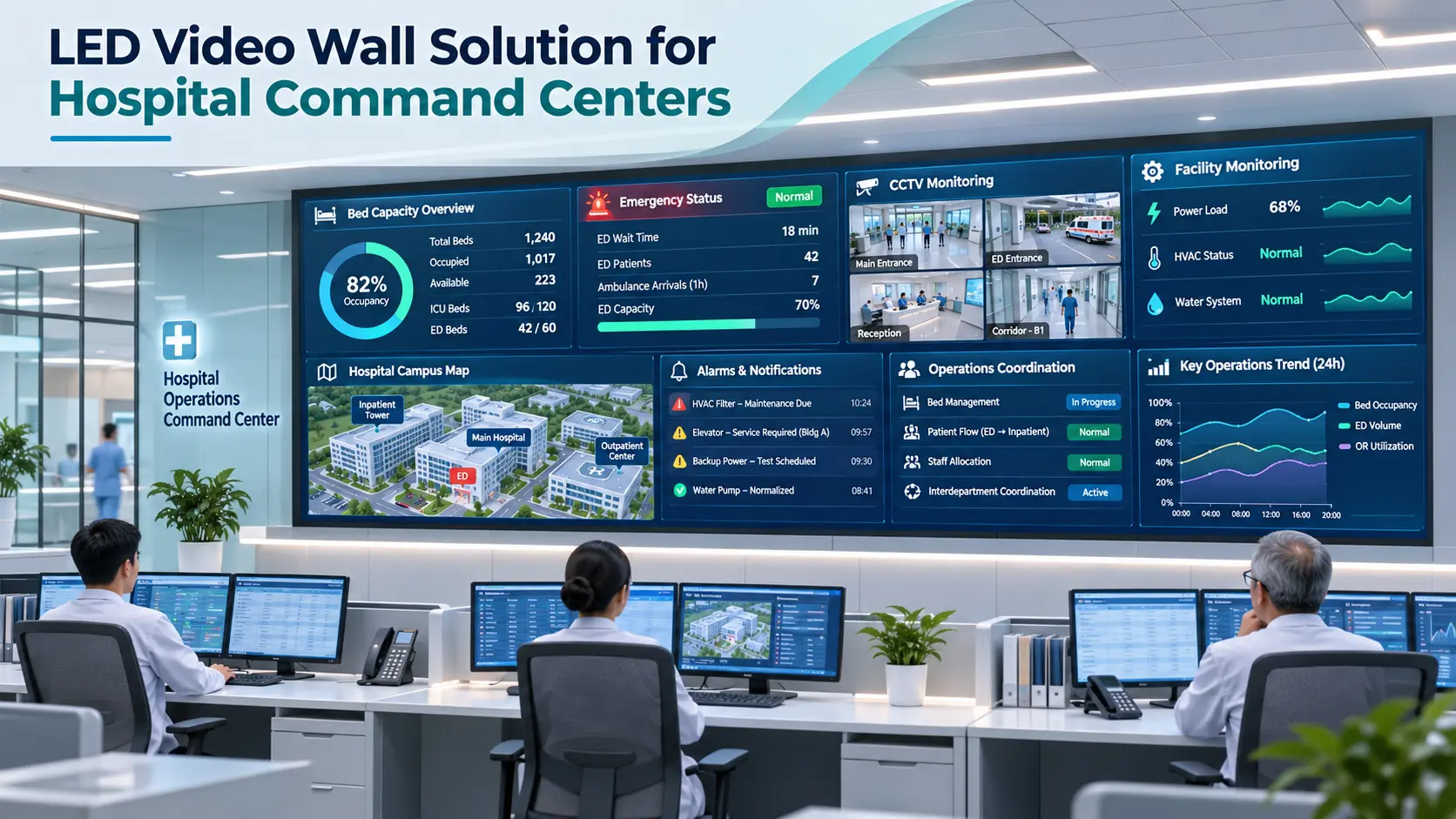
Modern hospitals depend on many operational systems working together.
A hospital command center may need to monitor emergency operations, bed capacity, CCTV, facility systems, alarms, logistics, campus maps and operational dashboards from one centralized location.
When this information is distributed across multiple small monitors, it becomes more difficult for teams to understand the overall situation quickly.
A professional LED video wall for hospital command centers provides one large visualization platform where authorized staff can view multiple operational systems simultaneously.
The LED wall is not a medical diagnostic system. Its role is to support monitoring, coordination, emergency response and operational decision-making.
Quick Answer
A hospital command center LED wall can display:
-
Hospital operations dashboards
-
Emergency department status
-
Bed and capacity information
-
CCTV monitoring
-
Facility alarms
-
Campus maps
-
Energy and utility systems
-
Emergency response information
-
Video conferencing
-
Multi-department operational data
The correct solution should be designed around:
Room Size → Viewing Distance → Screen Resolution → Data Sources → Video Processing → Privacy & Security → Reliability
Table of Contents
1. What Is a Hospital Command Center LED Wall?
A hospital command center LED video wall is a large-format display system used to present information from multiple operational platforms in one centralized environment.
It may be installed in:
-
Hospital operations centers
-
Emergency command centers
-
Security monitoring rooms
-
Facility management centers
-
Multi-campus control centers
-
Logistics coordination rooms
Unlike a normal meeting-room screen, a hospital command center display often needs to show several independent information sources at the same time.
For example:
Operations Dashboard + CCTV + Facility Alarm + Campus Map + Emergency Status
This provides a clearer overall view for authorized teams.
2. Why Hospitals Need Centralized Visualization
Hospitals are complex environments involving many departments and support systems.
A large medical campus may include:
-
Emergency departments
-
Inpatient buildings
-
Outpatient facilities
-
Laboratories
-
Pharmacies
-
Parking areas
-
Utility systems
-
Security systems
-
Logistics operations
A centralized LED wall helps bring selected information together instead of forcing staff to switch constantly between different screens.
Main Benefits
Centralized Monitoring
Important operational information can be viewed in one place.
Faster Situational Awareness
Teams can see alarms, cameras, maps and operational dashboards simultaneously.
Better Coordination
Different departments can work from the same shared visualization platform.
Flexible Screen Layouts
The wall can switch between normal operations, emergencies, meetings and security events.
3. What Information Can Be Displayed?
The exact content depends on the hospital's own systems, permissions and privacy policies.
Hospital Operations Dashboards
High-level dashboards may include:
-
Bed capacity
-
Department status
-
Resource utilization
-
Service demand
-
Operational workload
Emergency Department Status
Command-center teams may need a centralized view of emergency activity, available capacity and operational conditions.
CCTV Monitoring
Camera feeds can be used for:
-
Entrances
-
Public areas
-
Parking areas
-
Campus perimeter
-
Restricted zones
Facility Management
Engineering and facility teams may monitor:
-
HVAC
-
Electrical systems
-
Backup power
-
Water systems
-
Building alarms
-
Environmental conditions
Campus Maps
Large hospitals may use maps to show different buildings, entrances, emergency routes and incident locations.
Emergency Information
During an incident, the LED wall may prioritize:
Incident Location + CCTV + Facility Alarms + Campus Map + Emergency Coordination
4. How Does the System Work?
A typical hospital command center visualization system follows this structure:
Hospital Systems → Network & Control → Video Processing → LED Video Wall → Authorized Operators
Data Sources
Potential sources may include:
-
Operations computers
-
CCTV systems
-
Facility-management platforms
-
Emergency systems
-
Campus maps
-
Approved dashboards
-
Video conference systems
Video Processing
A professional video processor or video wall splicer can:
-
Receive multiple inputs
-
Scale different sources
-
Create multiple windows
-
Save screen layouts
-
Switch presets
-
Manage large LED resolutions
LED Video Wall
The LED wall becomes the main shared visualization surface for the command center.
For a wider system overview, see:
LED Command Center Display System: Architecture, Remote Monitoring and Control Room Design
5. How to Choose the LED Video Wall
Hospital command centers are usually indoor, close-viewing environments.
The main selection factors are pixel pitch, screen size, resolution and viewing distance.
Pixel Pitch
Common fine-pitch options may include:
-
P0.9
-
P1.2
-
P1.5
-
P1.8
-
P2
The correct choice depends on:
Viewing Distance + Screen Size + Required Detail + Budget
If the display needs to show small text and several dashboards simultaneously, higher pixel density may improve readability.
Screen Size
The screen should be large enough for operators to read important information from their working positions.
Consider:
-
Available wall dimensions
-
Number of operators
-
Viewing distance
-
Number of simultaneous windows
-
Room layout
Resolution
Resolution should be determined before selecting the video processor.
A screen showing eight independent information windows requires more pixel capacity than a screen used mainly for one full-screen dashboard.
6. Multi-Source Visualization
One of the main advantages of an LED command-center wall is the ability to display several sources at the same time.
A typical layout may include:
| Screen Area | Example Content |
|---|---|
| Main Area | Hospital Operations Dashboard |
| Left | CCTV Monitoring |
| Right | Facility Management |
| Upper Corner | Emergency Status |
| Lower Area | Campus Map / Alarms |
| Secondary Window | Video Conference |
A suitable video processor can arrange these sources as independent windows on one seamless LED canvas.
Important processor requirements may include:
-
Number of input channels
-
Maximum loading capacity
-
Number of layers
-
4K input support
-
Preset management
-
Signal backup
-
Optical transmission
The processor should be selected after the final screen resolution and signal requirements are confirmed.
7. Emergency Coordination
Emergency coordination is one of the strongest applications for a hospital command center.
During normal operation, the wall may show:
Hospital Capacity + Facility Status + Security + Daily Operations
During an emergency, operators may switch to:
Incident Information + CCTV + Campus Maps + Alarms + Emergency Communication
Preset layouts can help make this transition faster.
For example:
Preset 1 — Daily Operations
Preset 2 — Security Event
Preset 3 — Facility Emergency
Preset 4 — Emergency Coordination
This allows one LED wall to support several operational scenarios without changing the physical display system.
8. Privacy and Security
Privacy and cybersecurity are especially important in healthcare environments.
A hospital command center should not display sensitive information simply because the technical system is capable of displaying it.
The project should follow the hospital's:
-
Privacy policies
-
IT security requirements
-
User permissions
-
Network-security standards
-
Access-control procedures
For shared command-center visualization, hospitals may choose to display:
-
Aggregated operational data
-
High-level dashboards
-
De-identified information
-
Facility status
-
Security information
Remote access should also follow the hospital's approved network and cybersecurity policies.
The LED display system should integrate with the hospital's authorized IT environment rather than bypass it.
9. Reliability and Maintenance
Hospital command centers may operate for long periods or even continuously.
The LED display system should therefore be designed for stable operation.
Important considerations include:
-
Reliable LED modules
-
Stable receiving cards
-
Quality power supplies
-
Good heat management
-
Signal stability
-
Spare modules
-
Spare power supplies
-
Spare receiving cards
For critical environments, backup processors, signal paths or power systems may also be considered.
Front Maintenance
Many hospital LED walls are installed close to a wall.
A front-maintenance design allows technicians to access:
-
LED modules
-
Receiving cards
-
Power supplies
-
Internal components
from the front of the display.
This reduces rear maintenance space and improves long-term serviceability.
10. What Buyers Should Provide
Before requesting an LED command-center solution, prepare the following information.
Control Room Information
-
Room dimensions
-
Available wall size
-
Viewing distance
-
Number of operators
Display Requirements
-
Target screen size
-
Preferred pixel pitch
-
Required resolution
-
Front-maintenance requirement
Signal Requirements
-
Number of computers
-
CCTV sources
-
Dashboard sources
-
HDMI / DP / SDI / IP signals
-
Number of simultaneous windows
-
4K input requirements
Project Requirements
-
Operating hours
-
Backup requirements
-
Installation location
-
Delivery destination
-
Installation requirements
The more complete the project information, the more accurately the LED wall and processor can be configured.
11.FAQ
What is a hospital command center LED video wall?
It is a centralized LED display used to visualize approved information from hospital operations, security, facility management and emergency systems.
What pixel pitch is suitable for a hospital command center?
Fine-pitch LED such as P0.9–P2 is commonly considered, but the correct choice depends on viewing distance, screen size and content detail.
Can one LED wall display multiple hospital systems?
Yes. A suitable video processor can arrange multiple authorized sources into independent windows on one LED wall.
Can CCTV and operational dashboards be displayed together?
Yes. Multi-source visualization is one of the main advantages of a command-center LED system.
Can patient information be displayed?
That depends on the hospital's privacy, access-control and information-security policies. Sensitive information should only be displayed when properly authorized.
Is front maintenance recommended?
For LED walls installed close to a building wall, front maintenance is usually more practical.
Can the system operate 24/7?
Professional LED systems can be designed for long-hour operation, but component quality, cooling, redundancy and maintenance should be planned according to the project.
12.Conclusion
A professional LED video wall solution for hospital command centers should do more than provide a large screen.
Its purpose is to create a centralized visualization environment where authorized teams can quickly understand operational conditions and coordinate responses.
The recommended design process is:
Define Operational Needs → Identify Data Sources → Determine Screen Size and Resolution → Select Video Processing → Plan Security, Reliability and Maintenance
For hospital command centers, emergency operations centers, security rooms and facility-management centers, the ideal LED system should provide:
Clear Visualization + Multi-Source Management + Flexible Layouts + Reliable Operation + Secure Integration
Planning a Hospital Command Center LED Wall?
Send JunChen Display your:
Room Size + Screen Size + Viewing Distance + Data Sources + Required Windows + Destination
We can recommend a suitable fine-pitch LED display and video-processing configuration.
JunChen Display
Guangzhou JunChen Display Technology Co., Ltd.
WhatsApp: +86 188 1890 1997
Email: admin@ledscreenwholesale.com
Website: www.jcdisplay.com
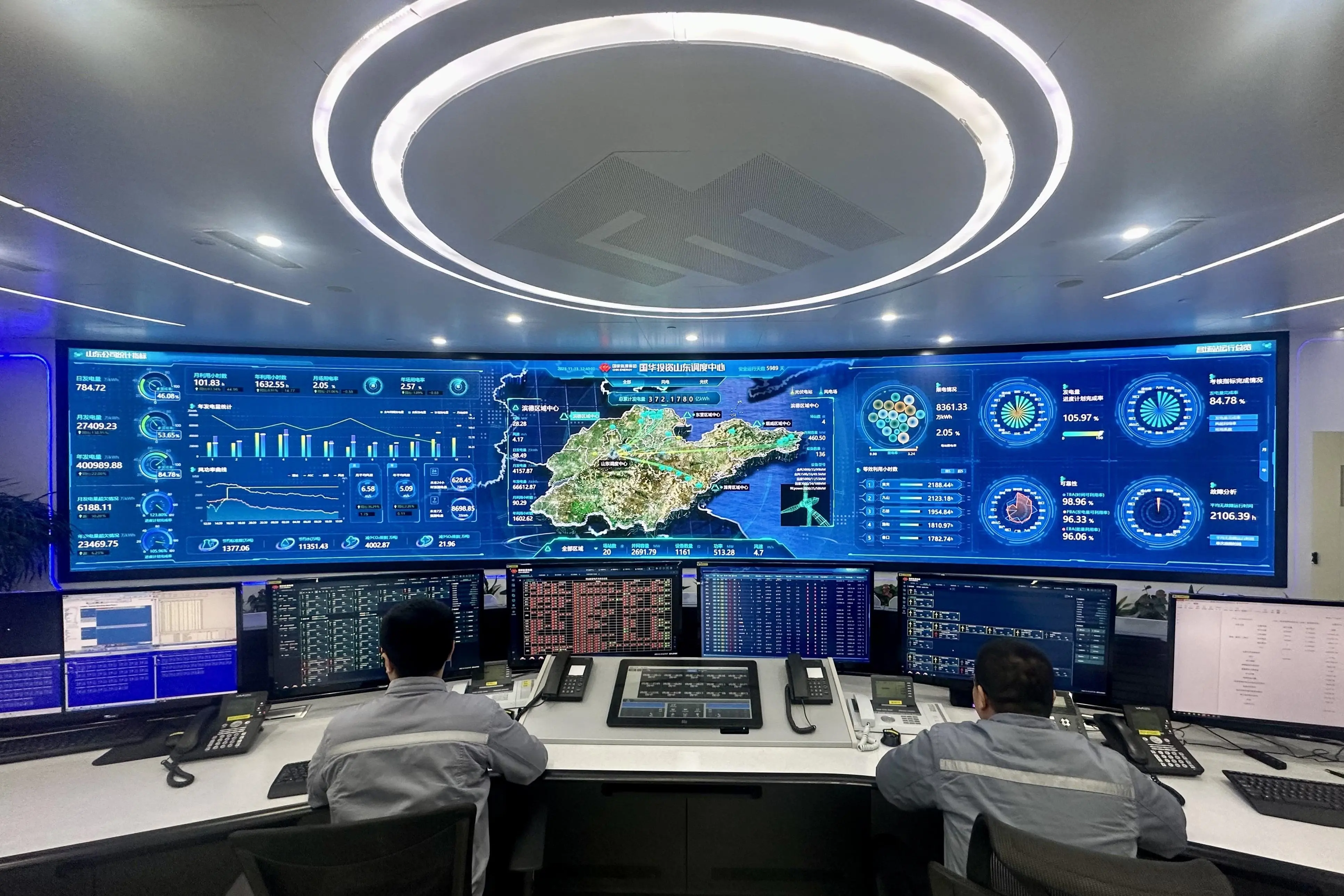
LED Video Wall for Energy Facility Control Rooms
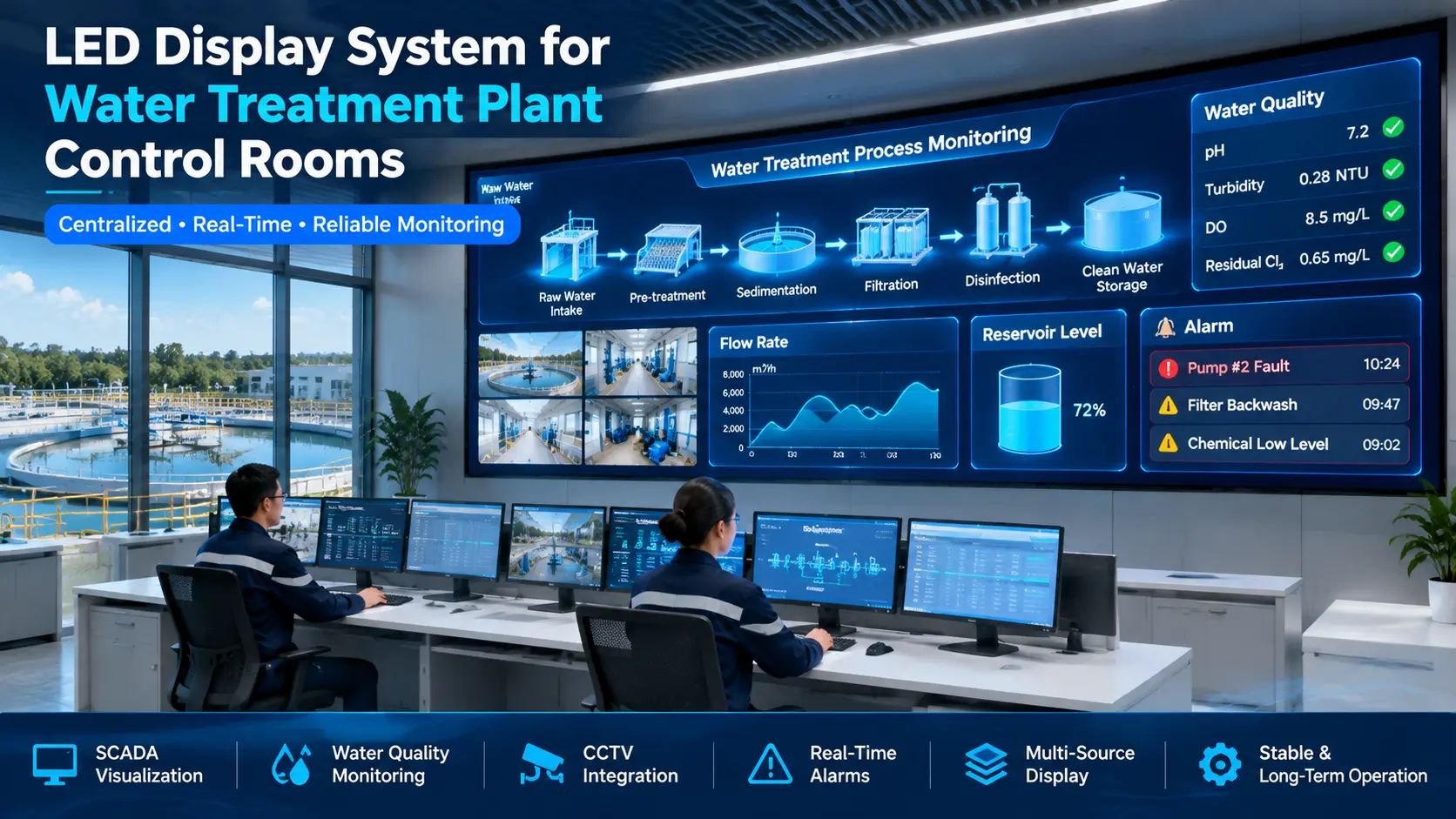
LED Display System for Water Treatment Plant Control Rooms

Tell Us What Are You Looking For?
