
How to Choose the Right LED Display for Your Business
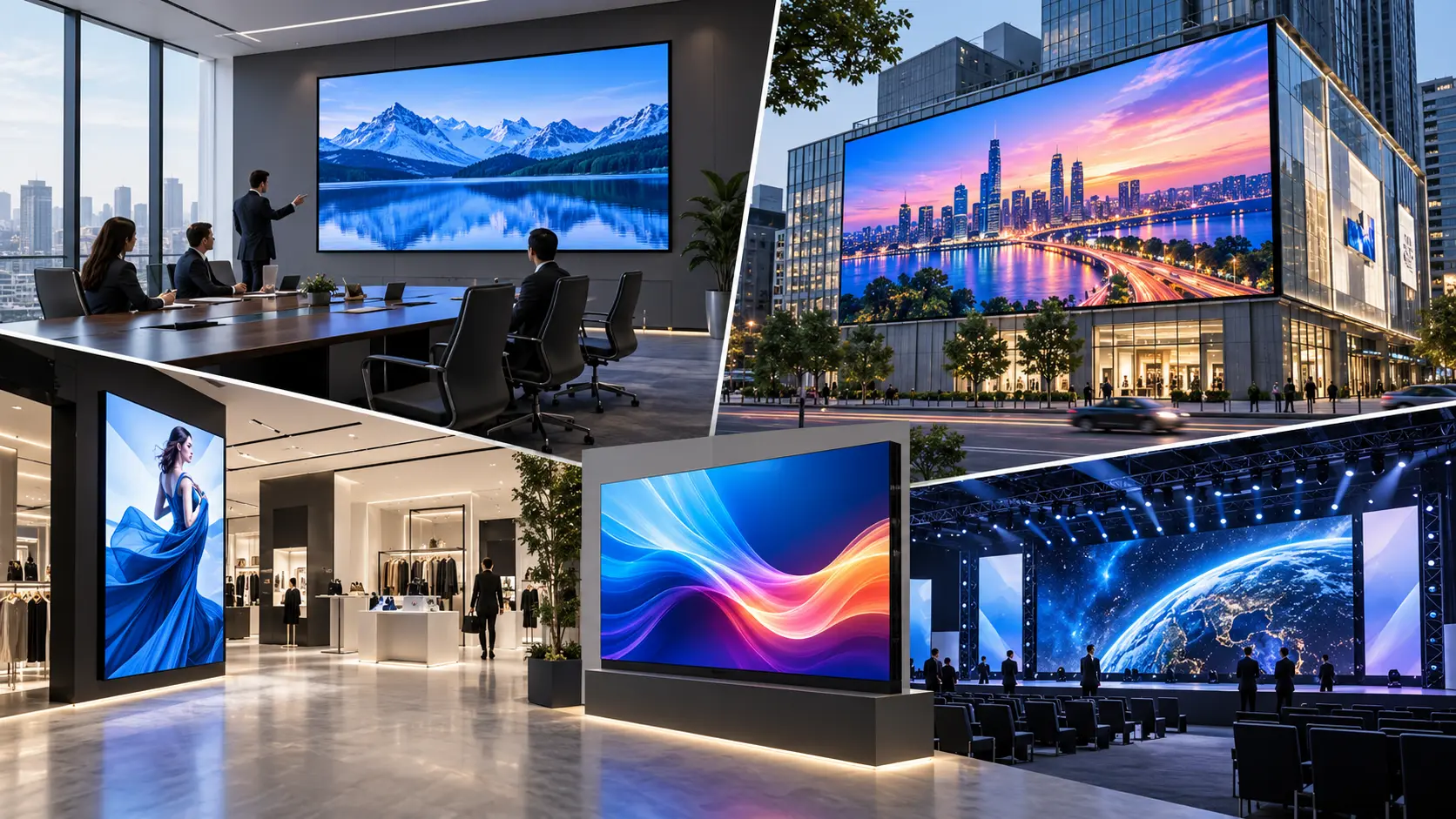
Choosing an LED display is not simply about selecting the highest resolution or the lowest price.
For B2B buyers, the right LED display depends on the application, installation environment, viewing distance, pixel pitch, screen size, brightness, maintenance method, operating requirements, and total project cost.
A suitable LED display should provide enough visual performance and reliability for the real project without adding unnecessary cost.
Quick Answer: How to Choose an LED Display
Before requesting a quotation, evaluate these eight factors:
- Application
- Indoor or outdoor environment
- Viewing distance
- Pixel pitch
- Screen size and resolution
- Brightness
- Installation and maintenance method
- Total project and operating cost
The best LED display is therefore not necessarily the display with the smallest pixel pitch or the lowest price. It is the configuration that matches the actual business application.
Table of Contents
- Start With the Application
- Indoor or Outdoor: Determine the Environment
- Choose Pixel Pitch Based on Viewing Distance
- Select the Right Screen Size and Resolution
- Choose the Appropriate Brightness
- Fixed or Rental LED Display?
- Choose the Right Maintenance Method
- Consider Power Consumption
- Compare the Complete Project Cost
- What Should You Ask an LED Display Manufacturer?
- What Information Should You Provide Before Requesting a Quote?
- Example: How to Request an LED Display Quotation
- Which LED Display Should You Choose?
- Why Choose JunChen Display?
- FAQ
- Conclusion
1. Start With the Application
The first question should be:
What will the LED display be used for?
Different applications require different technical priorities.
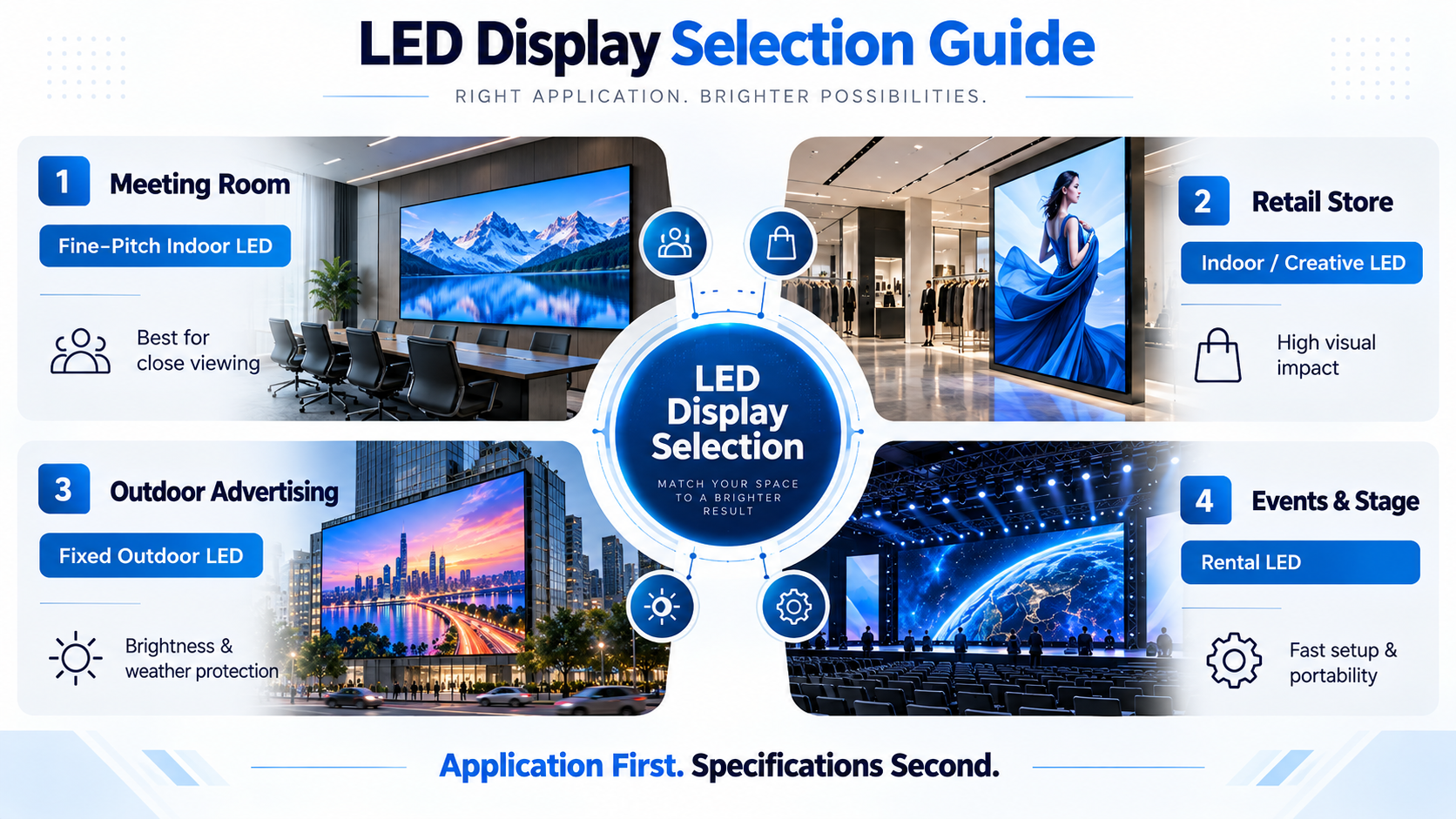
| Business Application | Typical LED Solution | Main Selection Priority |
|---|---|---|
| Conference room | Fine-pitch indoor LED | Image detail |
| Retail store | Indoor / creative LED | Visual impact |
| Shopping mall | Indoor / transparent LED | Visibility and design |
| Outdoor advertising | Fixed outdoor LED | Brightness and protection |
| Sports venue | Outdoor LED | Visibility and durability |
| Exhibition | Rental LED | Fast assembly |
| Concert / event | Rental LED | Lightweight and quick setup |
| Commercial building | Fixed / transparent LED | Size and installation |
| Advertising vehicle | Mobile LED | Mobility and power |
| Creative installation | Creative LED | Shape and visual effect |
An indoor conference-room display and an outdoor billboard may both use LED technology, but their technical requirements are very different.
B2B Buyer Rule: Define the application before asking a supplier for a price.
JunChen Display Insight
For project-based inquiries, the application should be confirmed before pixel pitch or cabinet type is finalized.
Selecting specifications before understanding the installation environment can lead to unnecessary cost or an unsuitable configuration.
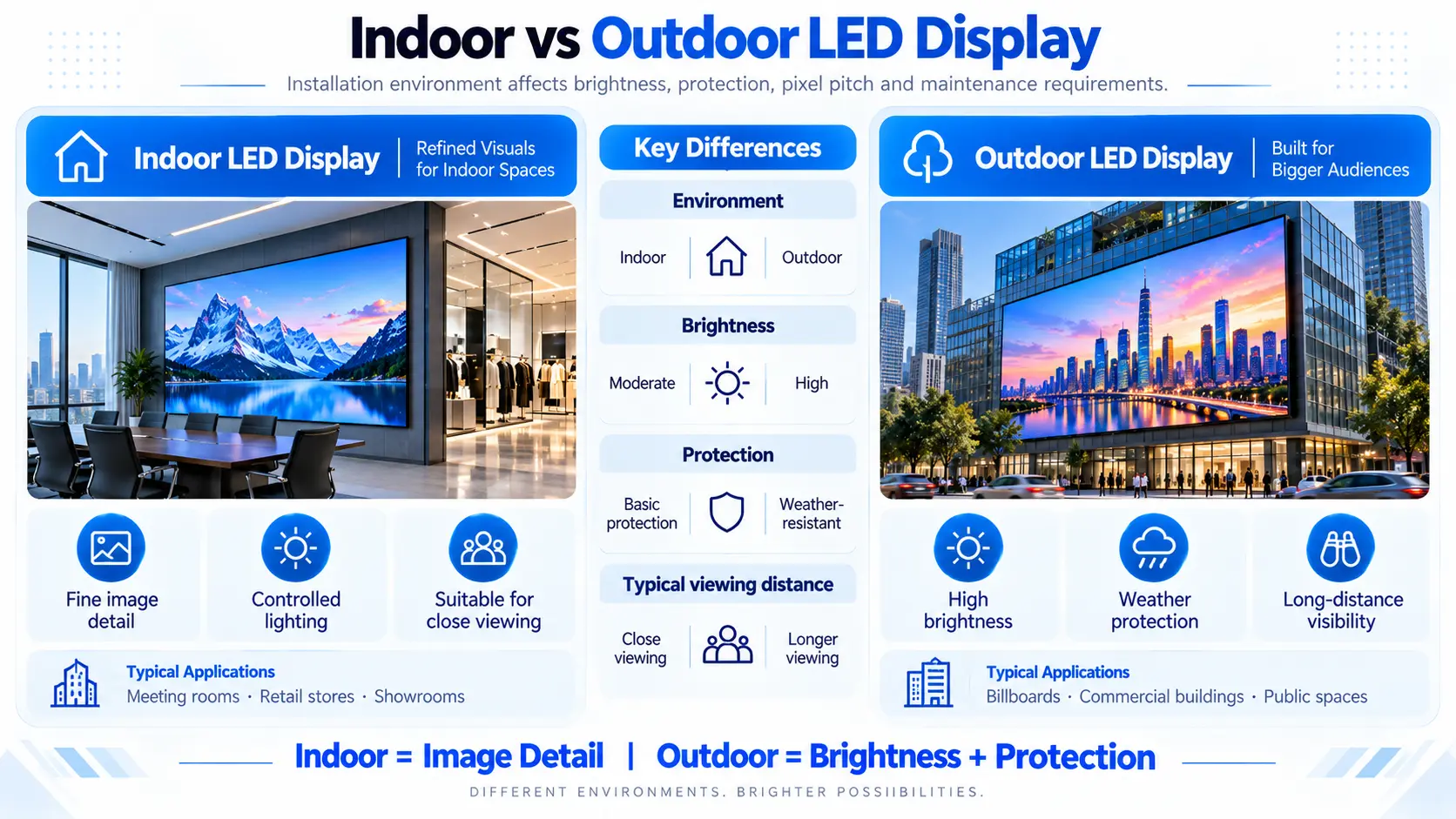
2. Indoor or Outdoor: Determine the Environment
The installation environment directly affects LED display selection.
Indoor LED Display
Indoor LED displays are commonly used in:
- Conference rooms
- Corporate showrooms
- Retail stores
- Shopping malls
- Control rooms
- Exhibition halls
- Hotels
- Stage environments
Because indoor lighting is generally controlled, extremely high brightness is often unnecessary.
For close-viewing applications, pixel pitch, image detail, color performance, and maintenance accessibility can become more important.
Outdoor LED Display
Outdoor LED displays are commonly used for:
- Advertising billboards
- Commercial buildings
- Shopping centers
- Roadside advertising
- Stadiums
- Public spaces
- Transportation areas
Outdoor projects need to consider:
- Daylight visibility
- Weather exposure
- Heat dissipation
- Dust and moisture
- Structural support
- Electrical installation
- Maintenance access
An outdoor LED display should therefore be evaluated as a complete engineering solution rather than simply as a screen panel.
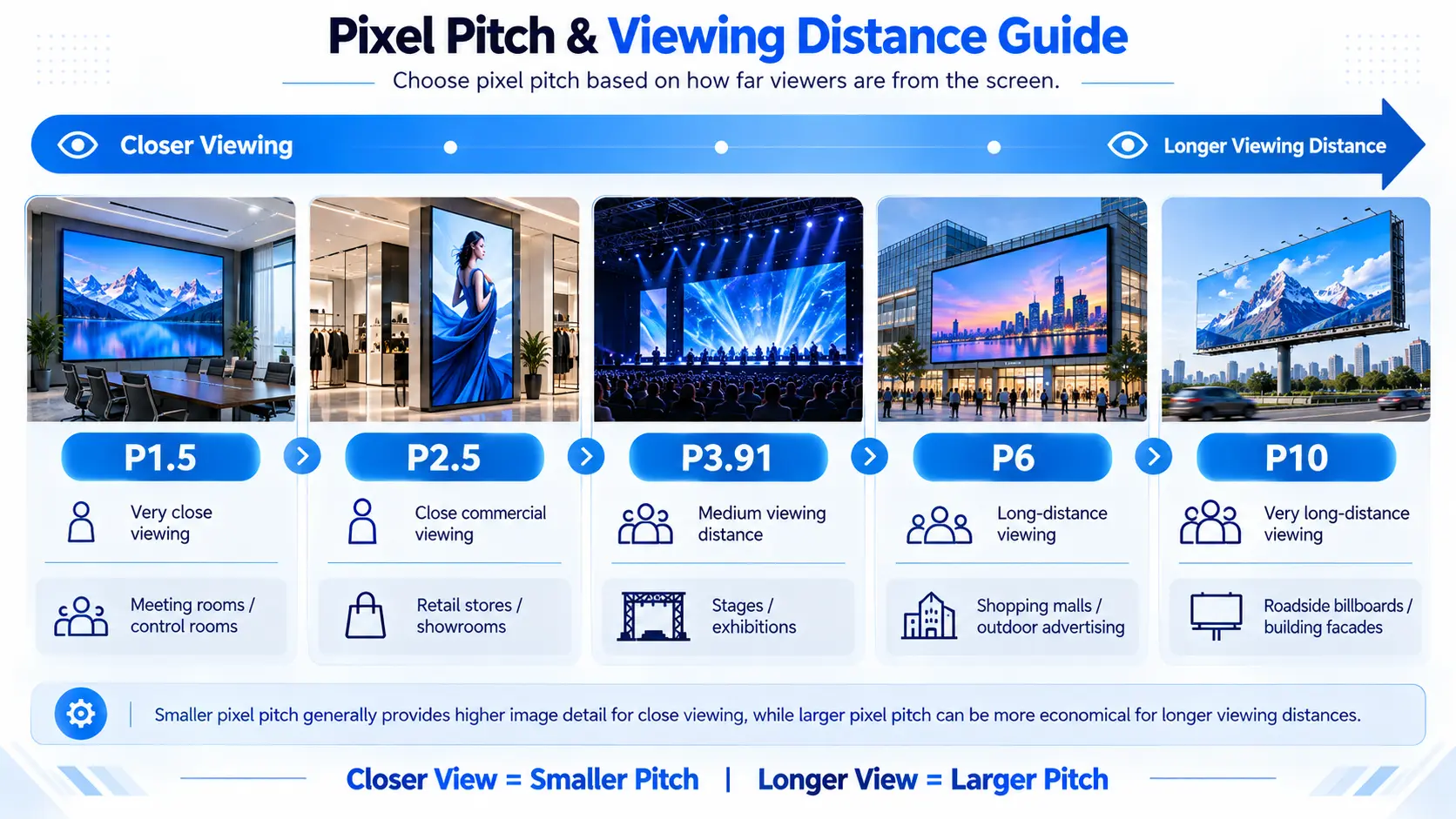
3. Choose Pixel Pitch Based on Viewing Distance
Pixel pitch is the distance between the centers of two adjacent LED pixels.
A smaller pixel pitch places more pixels within the same physical area and generally provides greater image detail at shorter viewing distances.
However, smaller pixel pitch usually also increases hardware cost.
A practical selection process is:
Confirm the typical viewing distance first, then choose the pixel pitch.
LED Display Pixel Pitch Selection Reference
The following table should be used as a practical starting point rather than a fixed engineering rule. Final selection should also consider screen size, content, environment, and budget.
| Typical Viewing Situation | Pixel Pitch Direction | Typical Applications |
|---|---|---|
| Very close viewing | Fine pixel pitch | Meeting rooms, control rooms |
| Close commercial viewing | Fine to medium pitch | Retail stores, showrooms |
| Medium viewing distance | Medium pixel pitch | Shopping malls, stages |
| Long-distance viewing | Larger pixel pitch | Outdoor advertising |
| Very long-distance viewing | Larger outdoor pitch | Building facades, roadside billboards |
Buyers should not automatically choose the smallest available pixel pitch.
If viewers are far from the screen, the additional pixel density may provide little practical visual benefit compared with the higher investment.
JunChen Display Insight
For most commercial LED projects, pixel pitch should be evaluated together with screen dimensions and audience distance.
The objective is not to maximize pixel density. It is to achieve sufficient visual detail for the intended viewing distance while maintaining a reasonable project budget.
4. Select the Right Screen Size and Resolution
Screen size affects visual impact, resolution, supporting structure, power requirements, and total project cost.
The required size should be based on:
- Viewing distance
- Available installation space
- Audience size
- Content type
- Viewing angle
- Aspect ratio
- Structural limitations
A larger screen is not automatically better.
A correctly positioned medium-size display can sometimes provide better commercial impact than an oversized display that does not match the space or viewing distance.
Basic Screen Area Calculation
Screen Area = Width × Height
For example:
6 m × 3 m = 18 m²
The screen area can then be used to estimate the required LED cabinets, modules, power supplies, supporting structure, and related project components.
Resolution should also be considered together with pixel pitch.
For a fixed screen size:
Smaller pixel pitch → more pixels → higher pixel density
For a fixed pixel pitch:
Larger screen size → more total pixels
A useful selection relationship is:
Viewing Distance + Pixel Pitch + Screen Size = Required Visual Performance
5. Choose the Appropriate Brightness
Brightness is particularly important for outdoor LED displays.
The required brightness depends on:
- Direct sunlight
- Screen orientation
- Installation location
- Operating time
- Ambient lighting
- Viewing distance
Indoor displays normally require less brightness because they operate in more controlled lighting conditions.
Outdoor screens must remain visible during daylight.
However:
Higher brightness is not always better.
Excessive brightness can be unnecessary for shaded, indoor, or nighttime applications and may increase power consumption.
The objective should be:
Enough brightness for clear visibility under the actual operating conditions.
6. Fixed or Rental LED Display?
Another important decision is whether the LED display will be permanently installed or repeatedly moved.
Fixed LED Display
Fixed LED displays are designed for long-term installation.
Typical applications include:
- Outdoor advertising
- Shopping malls
- Commercial buildings
- Corporate installations
- Retail stores
- Permanent digital signage
These projects should consider structural support, electrical installation, environmental protection, and maintenance access.
Rental LED Display
Rental LED displays are designed for repeated transportation, assembly, and disassembly.
Typical applications include:
- Concerts
- Conferences
- Weddings
- Exhibitions
- Stage events
- Corporate events
Important considerations include:
- Cabinet weight
- Fast locking system
- Assembly speed
- Transportation
- Stackability
- Durability
- Maintenance efficiency
For rental companies, long-term operating efficiency can be more important than simply choosing the lowest initial cabinet price.
7. Choose the Right Maintenance Method
Maintenance is often overlooked during purchasing, but it can significantly affect the total cost of ownership.
| Maintenance Type | Suitable Situation | Main Advantage |
|---|---|---|
| Front maintenance | Limited rear access | Components can be serviced from the front |
| Rear maintenance | Sufficient space behind the screen | Convenient rear service access |
Before purchasing, ask:
How will a failed LED module, receiving card, or power supply be replaced after installation?
A low initial price can become expensive if the screen is difficult to access and maintain.
JunChen Display Insight
Maintenance access should be confirmed during the project design stage, especially for wall-mounted displays, narrow installation spaces, and large outdoor structures.
The cabinet design should match the actual service conditions of the project.
8. Consider Power Consumption
For large LED installations, electricity can become an important long-term operating cost.
Power consumption depends on:
- Screen area
- Pixel pitch
- Brightness
- LED components
- Driving system
- Content brightness
- Operating hours
- Display configuration
B2B buyers should ask suppliers to provide both:
Maximum power consumption
and, where available,
Typical or average power consumption
This is particularly important for:
- Large outdoor billboards
- 24/7 commercial displays
- Multiple-screen installations
- Projects with limited available power
- Long-term advertising applications
The lowest purchase price does not always produce the lowest total cost of ownership.
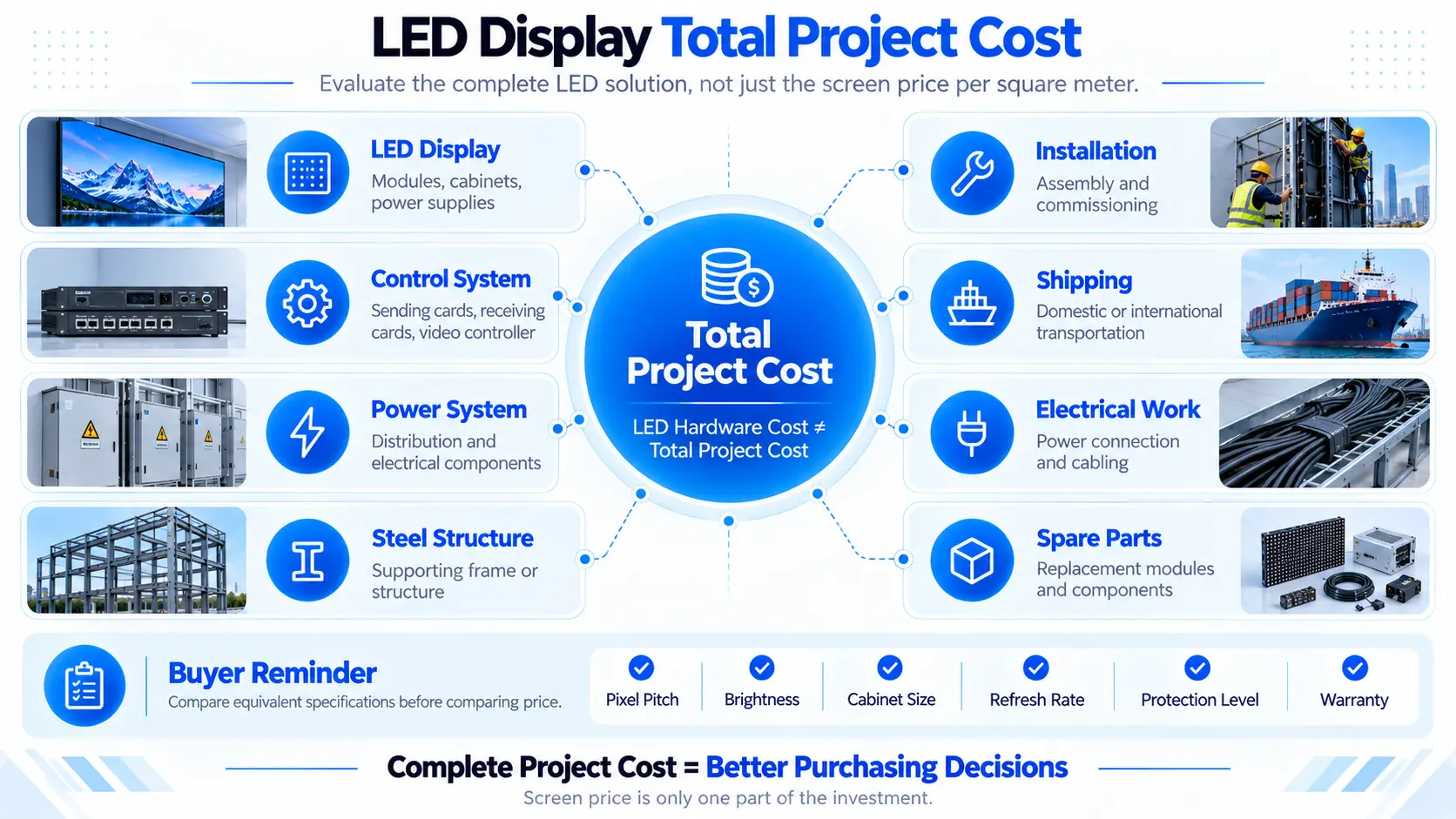
9. Compare the Complete Project Cost
One of the most common LED display purchasing mistakes is comparing suppliers only by price per square meter.
A complete LED project may include much more than the screen cabinets.
| Cost Item | Possible Requirement |
|---|---|
| LED display | Main display hardware |
| Control system | Sending, receiving, and video control |
| Power system | Power supplies and distribution |
| Steel structure | Supporting structure |
| Installation | Assembly and commissioning |
| Shipping | International or domestic transportation |
| Electrical work | Power connection |
| Spare parts | Maintenance inventory |
| Content system | Depending on application |
Therefore:
LED Hardware Cost ≠ Total Project Cost
Before comparing quotations, make sure the specifications are equivalent, including:
- Pixel pitch
- Brightness
- Cabinet size
- Cabinet material
- LED components
- Refresh rate
- Control system
- Protection level
- Maintenance method
- Warranty
- Spare parts
- Installation scope
Only then is the price comparison meaningful.
10. What Should You Ask an LED Display Manufacturer?
Before placing an order, B2B buyers should request clear technical and commercial information.
Recommended Questions
- What pixel pitch do you recommend for our viewing distance?
- Is this model designed for indoor or outdoor use?
- What brightness level does it provide?
- What are the maximum and typical power consumption levels?
- What maintenance method does the cabinet use?
- What control system is included?
- What are the cabinet size and weight?
- What is the refresh rate?
- What protection rating is available for outdoor use?
- What exactly is included in the quotation?
- What warranty and technical support are provided?
- Are spare parts available?
These questions help buyers compare complete LED display solutions instead of simply comparing headline prices.
11. What Information Should You Provide Before Requesting a Quote?
A manufacturer can provide a more accurate recommendation when the project requirements are clear.
| Project Information | What to Provide |
|---|---|
| Application | Advertising, retail, event, meeting room, etc. |
| Environment | Indoor or outdoor |
| Screen size | Width × height |
| Viewing distance | Typical audience distance |
| Quantity | Number of screens |
| Operating hours | Daily or continuous operation |
| Installation | Wall, structure, stage, vehicle, etc. |
| Destination | Delivery country / city |
| Maintenance | Front or rear access |
| Budget | Target project range |
| Delivery | Required completion date |
The more complete the information, the more accurately an LED display manufacturer can recommend a suitable configuration.
12. Example: How to Request an LED Display Quotation
Instead of sending:
“Please quote LED screen.”
A better B2B inquiry would be:
“We need an outdoor fixed LED display for a commercial building. The screen size is approximately 6 × 3 meters, with an estimated viewing distance of 15–20 meters. Please recommend the appropriate pixel pitch, brightness, cabinet configuration, control system, spare parts, and complete quotation including shipping.”
This gives the manufacturer enough information to develop a project-specific solution instead of simply providing a generic product price.
13. Which LED Display Should You Choose?
There is no universal “best” LED display.
Different applications require different priorities.
| Project Type | Main Priorities |
|---|---|
| Corporate meeting room | Fine pixel pitch, image detail, front maintenance |
| Outdoor billboard | Brightness, protection, reliability, viewing distance |
| Event rental | Lightweight cabinets, fast assembly, durability |
| Retail storefront | Visual impact, brightness, installation flexibility |
| Commercial building | Screen size, structure, protection, maintenance |
| Exhibition | Fast installation, transportation, visual impact |
The specification should follow the application—not the other way around.
14. Why Choose JunChen Display?
JunChen Display provides customized LED display solutions for commercial and professional applications, including COB LED displays, fixed LED displays, rental LED displays, transparent LED displays, poster displays, mobile LED solutions, and creative LED displays.
For project-based inquiries, Guangzhou JunChen Display Technology Co., Ltd. evaluates factors such as:
- Application
- Viewing distance
- Pixel pitch
- Screen dimensions
- Brightness
- Installation environment
- Maintenance requirements
- Project budget
before recommending an LED display configuration.
This project-based approach helps B2B buyers avoid choosing specifications that are unnecessarily expensive or unsuitable for the actual application.
15.FAQ
What is the most important factor when choosing an LED display?
There is no single factor. Application, viewing distance, pixel pitch, screen size, brightness, installation environment, and maintenance requirements should be evaluated together.
How do I choose the right LED display pixel pitch?
Start with the typical viewing distance and application. Smaller pixel pitches are generally more suitable for close viewing, while larger pixel pitches can be suitable for longer viewing distances.
Is a smaller pixel pitch always better?
No. Smaller pixel pitch provides higher pixel density but usually increases cost. If viewers are far from the display, the additional detail may provide limited practical value.
Should I choose an indoor or outdoor LED display?
Choose according to the installation environment. Outdoor displays need appropriate brightness, environmental protection, heat dissipation, and structural support.
How much brightness does an outdoor LED display need?
It depends on daylight conditions, screen orientation, ambient lighting, location, and operating time. Brightness should be selected according to the actual installation environment rather than simply choosing the highest available value.
Should I buy a fixed or rental LED display?
Choose fixed LED for permanent installations and rental LED when the screen will be repeatedly transported, assembled, and disassembled.
How can I compare two LED display suppliers fairly?
Compare equivalent specifications, including pixel pitch, brightness, LED components, cabinet design, control system, maintenance method, warranty, spare parts, installation scope, and total project cost.
16.Conclusion
Choosing the right LED display starts with the project requirements, not the product price.
The selection process can be summarized as:
Application → Environment → Viewing Distance → Pixel Pitch → Screen Size → Brightness → Maintenance → Total Cost
A suitable LED display should provide the required image quality and visibility while remaining practical to install, maintain, and operate.
For B2B buyers, the best purchasing strategy is to define the project requirements first, compare equivalent technical configurations, and then evaluate the complete project cost.
Instead of simply asking:
“How much is an LED display?”
Ask:
“What LED display configuration is right for my project, and what is the complete cost?”
That question leads to a more accurate and cost-effective purchasing decision.
Need a Project-Specific LED Display Recommendation?
Send JunChen Display your screen size, viewing distance, application, indoor/outdoor environment, and destination.
Our team can recommend a suitable LED display configuration and prepare a project quotation.
Guangzhou JunChen Display Technology Co., Ltd.
LED Display Pixel Pitch vs Viewing Distance: How to Choose the Right Pixel Pitch
Visiting Guangzhou for the 140th Canton Fair? Meet JunChen Display at Our LED Showroom
Related Article
Tell Us What Are You Looking For?
