
Is a Smaller Pixel Pitch Always Better? Comparing P1.5, P2.5, P3 LED Panel wall and Their Ideal Scenarios
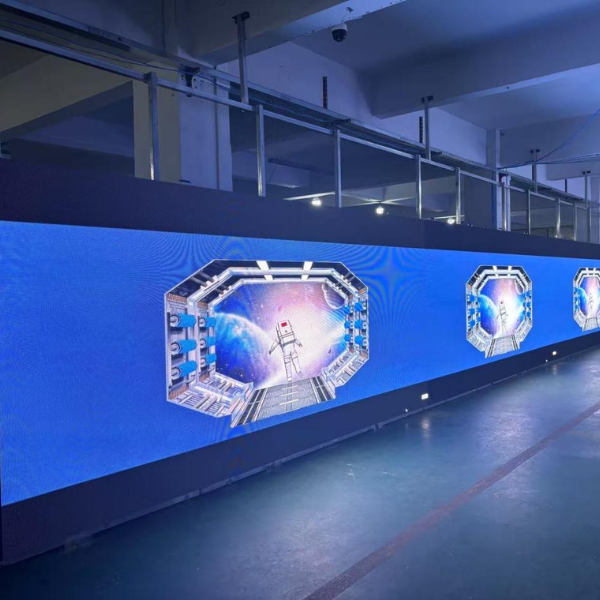
Is a Smaller Pixel Pitch Always Better? Comparing P1.5, P2.5, P3 LED Panel Wall and Their Ideal Scenarios
When selecting an led screen, ‘pixel pitch’ is a key parameter that cannot be ignored. Many people see models such as P1.5, P2.5, and P3 and instinctively assume that the smaller the number, the better — after all, the idea that ‘the denser the pixels, the clearer the image’ is deeply ingrained. But is that really the case? Today, we will unravel the mystery of pixel pitch and see which scenarios are best suited to different specifications of led screens.
I. First, understand: What is pixel pitch?
Pixel pitch refers to the distance between the centres of two adjacent pixels on an led screen, measured in millimetres (mm). For example, P2.5 means that the centres of two pixels on an led screen are 2.5 millimetres apart.
This parameter directly determines the screen's pixel density: the smaller the pitch, the more pixels per unit area, resulting in richer image detail on the led screen. However, this does not mean ‘smaller is always better,’ as it is also closely related to viewing distance, usage scenarios, cost, and other factors for any led screen or led panel wall.
II. What are the differences between P1.5, P2.5, and P3? Let's take a closer look at each one, from parameters to applications.
1. P1.5: For those who demand detail at close range on a small led screen.
Key features: Pixel pitch of just 1.5mm, making it one of the mainstream models for indoor small-pitch led screens. A small led screen with P1.5 pitch has approximately 440,000 pixels per square metre (1000/1.5 ≈ 666 pixels/m, 666 × 666 ≈ 440,000), offering image clarity comparable to high-definition TV.
Optimal viewing distance: 1.5–3 metres. At this distance, the human eye can barely discern pixel granularity on this small led screen, making it ideal for close-up immersive viewing.
Suitable applications:
- Small-sized main screens in high-end meeting rooms (e.g., 3–10 square metres) as a small led screen;
- Background screens and close-up screens in live streaming studios using a small led screen;
- Close-up interactive display stands in museums and science centres with a small led screen;
- High-definition monitoring screens in command centres as part of an led panel wall.
2. P2.5: The king of cost-effectiveness, balancing clarity and practicality for an led screen.
Key features: Pixel pitch of 2.5 mm, approximately 160,000 pixels per square metre (1000/2.5 = 400 pixels/metre, 400 × 400 = 160,000) on this led screen, with clarity sufficient to meet the needs of most indoor scenarios for an led screen or led panel wall.
Optimal viewing distance: 2.5 metres to 5 metres. Within this range, the image on the led screen will neither appear coarse due to overly sparse pixels nor suffer from performance waste due to overly dense pixels.
Suitable scenarios:
- Small to medium-sized meeting rooms (10–30 square metre screens) using an led screen, training rooms with an led screen;
- Shopping mall guide screens, brand display screens as an led screen;
- Restaurant menu screens, interactive ordering screens as an led screen;
- School multimedia classroom teaching screens as part of an led panel wall.
Advantages: Costs 30%–50% less than P1.5, with mature technology and strong compatibility, making it one of the best-selling models among indoor led screens and led panel walls.
3. P3: The ‘practical choice’ for large-scale applications like an led panel wall.
Key features: Pixel pitch of 3mm, approximately 110,000 pixels per square metre (1000/3 ≈ 333 pixels per metre, 333 × 333 ≈ 110,000) on this led screen, suitable for viewing from medium to long distances on an led panel wall.
Optimal viewing distance: 3 metres to 8 metres. When the led panel wall area is large (e.g., over 50 square metres) and viewers are at a distance, the clarity of P3 on the led panel wall fully meets the requirements.
Suitable applications:
- Main screens in large conference halls or auditoriums (30 m² to 100 m²) as an led panel wall;
- Information display screens in sports arenas or exhibition centres as an led panel wall;
- Image display screens in hotel lobbies or office building atriums as an led screen;
- Stage background screens in bars or KTV venues (especially effective when paired with dynamic video content) as an led panel wall.
Advantages: Lower cost and more flexible installation requirements, making it suitable for large-scale led panel walls and led screens.
III. Dispelling misconceptions: Smaller pixel pitch is not always better for an led screen or led panel wall.
When selecting an led screen or led panel wall, remember that ‘the right fit is the best fit.’ The following three principles can help you avoid pitfalls:
1. Viewing distance determines the minimum requirement for an led screen.
The human eye has limited resolution capabilities. When the viewing distance exceeds 1,000 times the pixel pitch, the graininess on the led screen disappears. For example:
- At a viewing distance of 5 metres, a P5 or smaller pixel pitch on an led screen or small led screen is sufficient (5 metres = 5,000 mm, 5,000/1,000 = 5 mm);
- Forcing the use of a P1.5 pixel pitch on a small led screen not only increases costs but also makes the difference imperceptible to the naked eye.
2. Scene requirements take precedence over parameters for an led screen or led panel wall
Static text display (e.g., menus, announcements) on an led screen requires higher clarity, so smaller pixel pitches on a small led screen can be selected; dynamic video and image display (e.g., stage backgrounds) on an led panel wall are less sensitive to pixel pitch, so larger pixel pitches on the led panel wall are more cost-effective.
3. Cost is proportional to area for an led screen or led panel wall
Small-pitch led screens have higher pixel density, resulting in more LED diodes and driver chips per square metre on the led screen or led panel wall, leading to exponential cost increases. For example, a 10㎡ small led screen with P1.5 pitch may cost 2–3 times more than an led panel wall with P3 pitch.
Ultimately, when choosing an led screen, small led screen, or led panel wall, there is no need to blindly pursue the ‘smallest pixel pitch.’ Instead, consider the viewing distance, screen size, usage scenario, and budget to make a comprehensive decision. The appropriate pixel pitch will ensure the best balance between visual quality and cost for your led screen, small led screen, or led panel wall. If you are still unsure, feel free to leave a message with your specific requirements, and we will help you recommend the most suitable solution for your led screen, small led screen, or led panel wall.
How Much Does It Cost to Build a Billboard? 2025 Guide to LED Billboard Cost & Factors
LED Screen for Church: Benefits of Church LED Video Wall & Panels
Related Article
Tell Us What Are You Looking For?
