
What is LED? A Complete Guide to LED Technology & Uses in 2025
2025-11-08
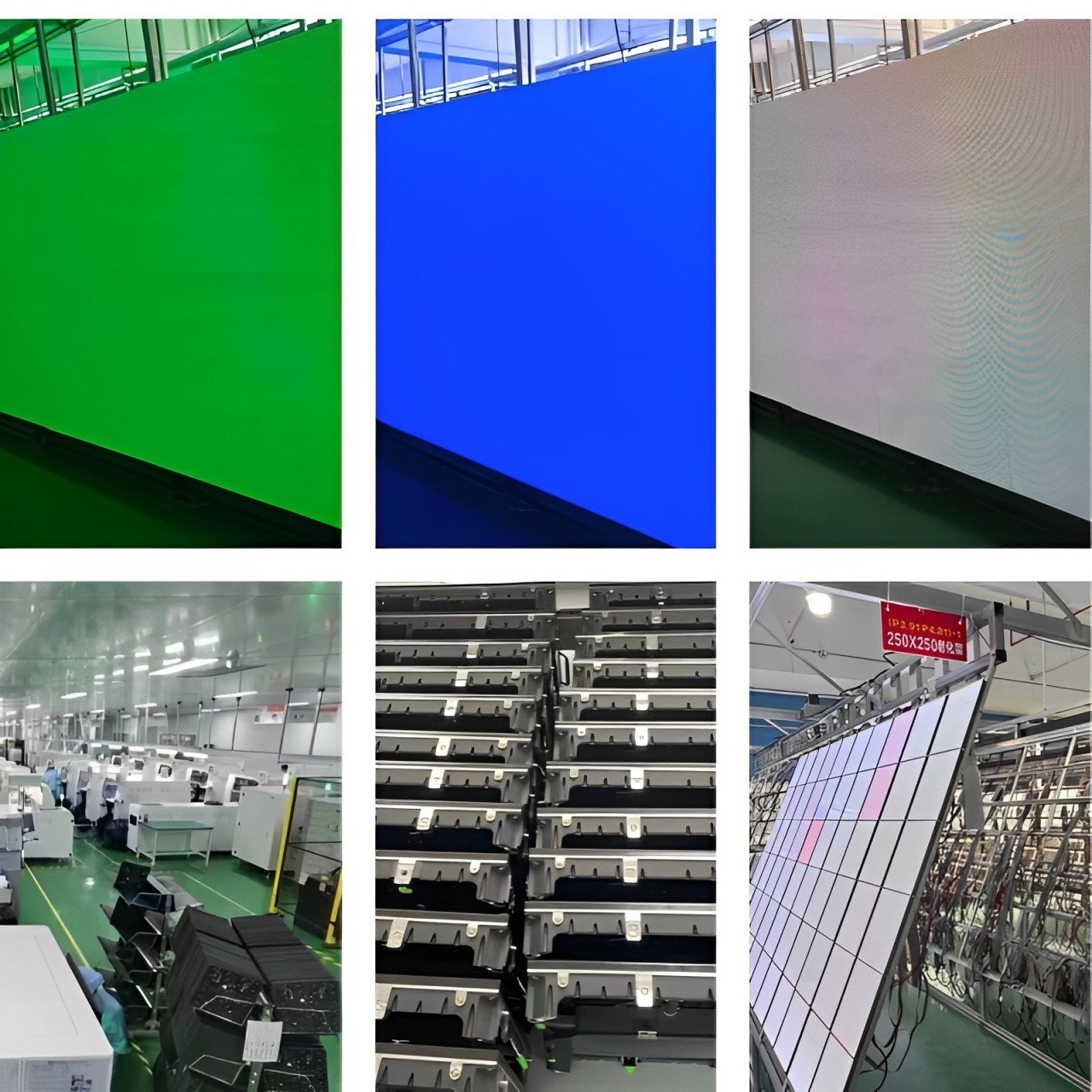
What is LED? A Complete Guide to LED Technology & Uses in 2025
Walk into any home, office, or public space in 2025, and you’ll likely be surrounded by LEDs. From smartphone screens to streetlights, from gaming monitors to smart home bulbs—this versatile technology has become the backbone of modern lighting and displays. But if you’re still asking, “What is LED?” you’re not alone. Despite their ubiquity, many people don’t fully understand how LEDs work, their key benefits, or why they’ve replaced traditional lighting. This guide breaks down everything you need to know about LED technology, from basics to real-world applications.
What is LED? Definition & Core Basics
LED stands for Light-Emitting Diode—a semiconductor device that converts electrical energy directly into light. Unlike incandescent bulbs (which use a heated filament) or fluorescent tubes (which rely on gas discharge), LEDs produce light through a process called electroluminescence—no heat, no gas, just efficient light generation.
At its core, an LED is a tiny chip made of semiconductor materials (typically silicon or germanium) doped with impurities to create two layers: a positively charged “p-type” layer and a negatively charged “n-type” layer. When an electric current passes through the diode, electrons from the n-type layer move to the p-type layer, releasing energy in the form of photons (light particles).
Key basics to remember:
-
LEDs are “directional” light sources—they emit light in a specific direction, unlike incandescent bulbs which scatter light everywhere.
-
They come in tiny sizes (as small as 1mm) but can be grouped for brighter, larger-scale lighting.
-
Modern LEDs are available in a full spectrum of colors, from warm white (2700K) to cool white (6500K) and even RGB (red-green-blue) for customizable hues.
In 2025, LED technology has evolved beyond basic lighting—today’s LEDs integrate with smart systems, feature adjustable brightness/color, and are used in everything from medical devices to automotive headlights.
How Do LEDs Work? The LED Working Principle
To truly answer “What is LED?” you need to grasp its working principle. Here’s a simplified breakdown of how LEDs produce light:
-
-
Gallium arsenide = red light
-
Gallium phosphide = green/yellow light
-
Indium gallium nitride = blue/white light (the basis for most 2025 LED bulbs)
-
-
Semiconductor Structure: The LED chip is made of a semiconductor material (e.g., gallium arsenide) with two doped layers. The p-type layer has “holes” (missing electrons), and the n-type layer has excess electrons.
-
Electric Current Application: When a voltage is applied to the LED, the electric current pushes electrons from the n-type layer across the “pn-junction” (the boundary between the two layers) into the p-type layer.
-
Photon Emission: As electrons fill the holes in the p-type layer, they lose energy. This energy is released as photons—particles of light. The color of the light depends on the semiconductor material:
-
Gallium arsenide = red light
-
Gallium phosphide = green/yellow light
-
Indium gallium nitride = blue/white light (the basis for most 2025 LED bulbs)
-
Heat Management: Unlike incandescent bulbs (which waste 90% of energy as heat), LEDs produce minimal heat. However, excess heat can shorten lifespan, so modern LEDs include heat sinks for cooling.
This efficient process is why LEDs are far more energy-saving than traditional lighting—a key reason they’ve become the global standard by 2025.
Common Types of LED Lights in 2025
LEDs aren’t one-size-fits-all. Over the years, they’ve evolved into specialized types for different uses. Here are the most common types of LED lights in 2025:
1. SMD LEDs (Surface-Mounted Device)
The most widely used type, SMD LEDs are mounted directly on circuit boards. They’re small (2835, 5050 are common sizes) and used in:
-
Smart bulbs
-
TV screens
-
Strip lights (for under-cabinet or accent lighting)
-
Office panel lights
2. COB LEDs (Chip-on-Board)
Multiple LED chips are packed closely on a single substrate, creating a single, bright light source. Ideal for:
-
Downlights
-
Floodlights
-
High-brightness task lighting (e.g., workshops)
3. OLEDs (Organic Light-Emitting Diodes)
Uses organic materials instead of semiconductors, producing thin, flexible light. Common in:
-
Smartphone screens (e.g., iPhone 16’s OLED display)
-
Curved TVs
-
Wearable devices (smartwatches)
4. High-Power LEDs
Designed for industrial or outdoor use, these LEDs produce intense light (100+ lumens per watt) and are used in:
-
Streetlights
-
Stadium lighting
-
Automotive headlights (standard in 2025 vehicles)
5. RGB LEDs
Combine red, green, and blue diodes to create customizable colors. Popular in:
-
Gaming setups (RGB keyboards, strip lights)
-
Event lighting (weddings, concerts)
-
Smart home bulbs (e.g., Philips Hue)
Benefits of LED Technology vs. Traditional Lighting
Why have LEDs replaced incandescent, fluorescent, and halogen lights by 2025? The benefits of LED technology are undeniable:
1. Unmatched Energy Efficiency
LEDs use 75% less energy than incandescent bulbs and 50% less than fluorescent tubes (U.S. Department of Energy, 2025). A 10W LED bulb produces the same brightness as a 60W incandescent bulb—slashing electricity bills.
2. Long Lifespan
The average LED lasts 50,000-100,000 hours, compared to 1,000 hours for incandescent bulbs and 10,000 hours for fluorescent tubes. That means a single LED bulb can last 10-20 years with daily use—no frequent replacements.
3. Eco-Friendly
LEDs contain no toxic materials (unlike fluorescent tubes which have mercury) and are 100% recyclable. Their energy efficiency also reduces carbon emissions: replacing one incandescent bulb with an LED saves 450kg of CO2 over its lifespan.
4. Instant On/Off
Unlike fluorescent tubes (which take time to warm up) or CFLs (which flicker), LEDs turn on instantly at full brightness—perfect for lighting, displays, and automotive use.
5. Versatility
LEDs come in any size, shape, or color. They can be dimmed, programmed, and integrated with smart home systems (e.g., voice control via Alexa or Google Home) for personalized lighting.
6. Low Heat Output
LEDs produce minimal heat, reducing fire risks and making them safe for use in tight spaces (e.g., under cabinets, inside appliances).
Practical Applications of LEDs in Daily Life
By 2025, LEDs are integrated into nearly every aspect of daily life. Here are the most common applications:
-
Home Lighting: Smart LED bulbs, strip lights, downlights, and ceiling fixtures—controllable via apps or voice.
-
Electronics: Smartphone screens, TV displays (OLED/Mini-LED), laptop backlights, and gaming monitors.
-
Automotive: Headlights, taillights, interior lighting, and dashboard displays (standard in all new cars).
-
Outdoor Lighting: Streetlights, floodlights, garden lights, and public space lighting (e.g., parks, airports).
-
Commercial/Industrial: Office panel lights, warehouse lighting, retail display lighting, and signage.
-
Specialized Uses: Medical devices (surgical lighting), horticulture (grow lights for indoor plants), and emergency lighting.
Even rental LED display screens (a top trend in 2025 events) rely on LED technology for bright, portable visuals at concerts, conferences, and festivals.
How to Choose the Right LED for Your Needs
With so many types of LED lights available, here’s how to pick the right one:
-
Brightness: Measured in lumens (not watts). For a bedroom, 800-1200 lumens is ideal; for a workshop, 2000+ lumens.
-
Color Temperature: Warm white (2700K-3000K) for bedrooms/living rooms; cool white (4000K-5000K) for offices/kitchens; daylight (6000K+) for task lighting.
-
Color Rendering Index (CRI): Look for CRI ≥90 for accurate color representation (critical for makeup, cooking, or design work).
-
Purpose: Choose SMD LEDs for general lighting, COB for high brightness, OLED for displays, and RGB for customizable colors.
-
Smart Features: Opt for Wi-Fi/Bluetooth-enabled LEDs if you want voice control or scheduling (e.g., turning lights on/off automatically).
FAQ: Common Questions About LED Technology
Q1: Does a brighter LED use more electricity?
No—brightness depends on lumens, not watts. A 15W LED can produce 2000 lumens (very bright), while a 20W incandescent only makes 250 lumens. LEDs convert 90% of energy to light (vs. 10% for incandescents), so brightness and power use aren’t directly proportional.
Q2: Do LEDs damage eyesight?
Quality LEDs won’t—choose bulbs with “flicker-free” certification and appropriate color temperature (avoid 6500K+ for long-term use). Poor-quality LEDs may flicker or emit excess blue light, so opt for trusted brands (e.g., Philips, Cree) with CRI ≥80.
Q3: Why are LED bulbs more expensive than regular bulbs?
While upfront cost is higher ($$5-$5-$10 vs. $$1-$1-$2 for incandescents), LEDs save money long-term. A 10W LED costs ~$$1/year to run, while a 60W incandescent costs ~$1/year to run, while a 60W incandescent costs ~$7/year—you’ll recoup the cost in 1-2 years (U.S. Energy Department, 2025).
Q4: What’s the difference between RGB LEDs and regular LEDs?
Regular LEDss emit a single fixed color (e.g., warm white), while RGB LEDs combine red, green, and blue diodes to mix 16 million+ colors. They’re controlled via apps or remotes, perfect for mood lighting, gaming, or events.
Q5: Can LEDs be dimmed? Do they need a special switch?
Most modern LEDs are dimmable, but check the packaging for “dimmable” labeling. You’ll need a compatible dimmer switch—old incandescent dimmers may cause flickering. Smart LEDs can dim via apps/voice without special switches.
Conclusion
So, what is LED? It’s a semiconductor technology that converts electricity into efficient, long-lasting light—and it’s the backbone of modern lighting and displays in 2025. From saving energy and money to offering endless versatility, LEDs have revolutionized how we light our homes, workplaces, and public spaces.
Whether you’re replacing old bulbs, shopping for a new TV, or choosing lighting for an event, understanding what is led and LED technology—including its types and benefits—helps you make informed decisions. As LED technology continues to evolve (with trends like Mini-LED, Micro-LED, and smarter integration on the horizon), it will remain the top choice for efficient, sustainable lighting.
Ready to make the switch to LEDs? Start small—replace a few incandescent bulbs with smart LEDs—and experience the difference in brightness, energy savings, and convenience.
Jumbotron 2025: Ultimate Guide to Giant Screens & Minijumbotron Trends
What Does LED Stand For? LED Guide | JunChen Display
Related Article

A B2B technical guide to selecting and combining fixed, floor, transparent, cube and other LED displays for automotive dealerships and 4S showrooms.
What LED Displays Can a 4S Dealership Use and How Should They Be Combined?
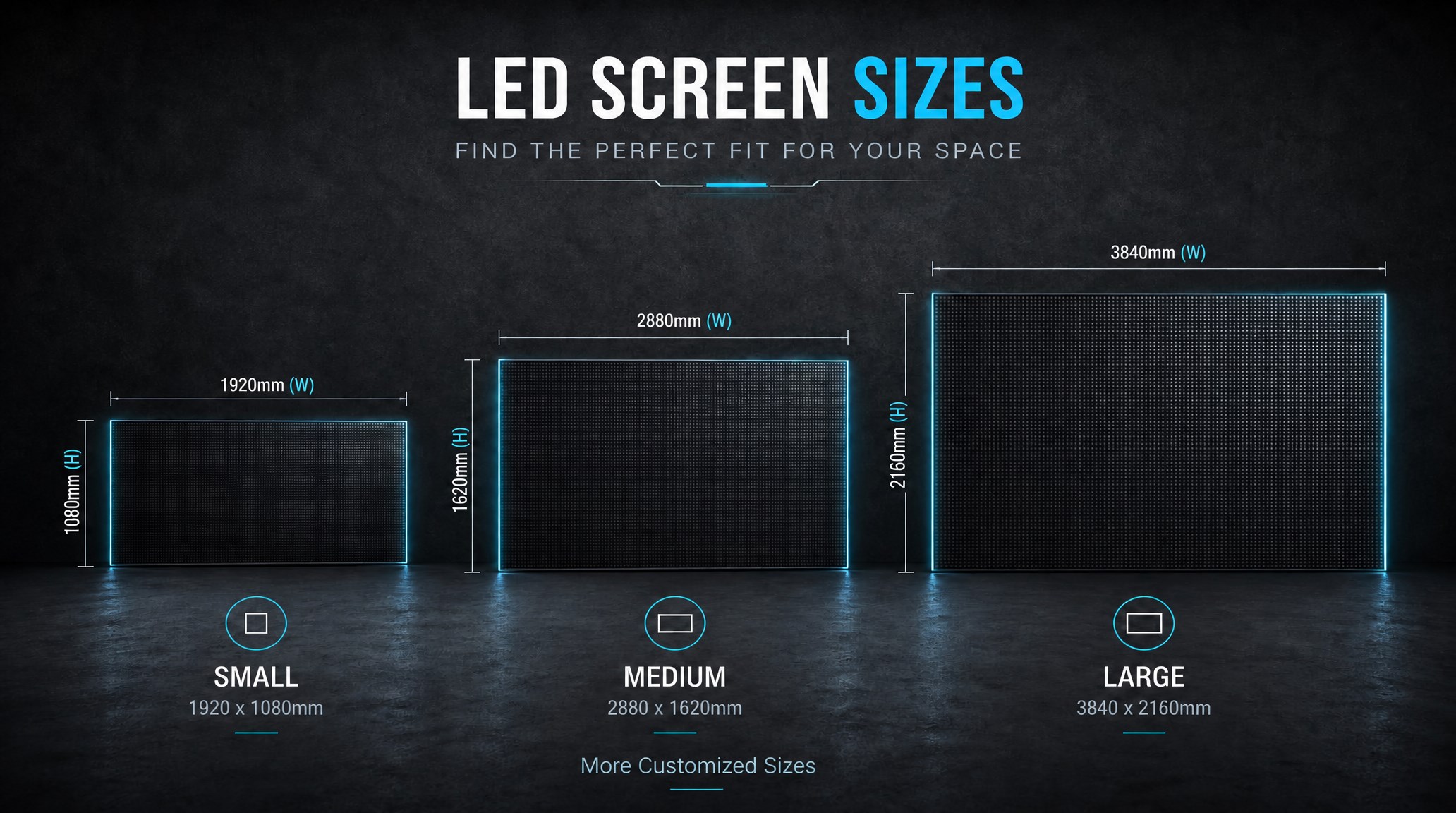
A practical guide explaining how to calculate LED display size, select pixel pitch, determine viewing distance, and choose suitable LED wall dimensions for commercial projects.
How to Choose the Right LED Display Size? Complete LED Screen Size Guide

The HD-B8L Poster Screen Control System is an Android-based LED display controller designed for commercial LED poster displays and digital signage. It integrates media playback, asynchronous LED control, HDMI synchronization, network communication, and cloud management into one device, simplifying installation and centralized content management.
What Is the HD-B8L Poster Screen Control System? A Complete Technical Guide for Commercial LED Displays
Tell Us What Are You Looking For?
