What Does LED Stand For? LED Guide | JunChen Display
2025-11-03

What Does LED Stand For? LED Guide | JunChen Display
Step into any home, office, or sports stadium, and you’ll see LED lights shining brightly—from the tiny indicator on your smartphone to the massive video walls at concerts. But have you ever stopped to ask: what does LED stand for? In this guide, we’ll break down the basics of LED technology, explain how it works, elaborate on why it’s revolutionizing the lighting and display industry, and showcase benchmark application cases by JunChen Display. Whether you’re a homeowner looking to upgrade your lighting or a business owner seeking professional display solutions, this article will answer all your questions about “what is LED”.
What Is LED? Decoding the Acronym
First, the core answer: LED stands for Light Emitting Diode. To make this term easier to understand, let’s break it down:
-
A “Diode” is a small semiconductor device that allows electric current to flow in only one direction (think of it as a “one-way gate” for electrons).
-
“Light Emitting” means that when an electric current passes through this diode, it directly produces visible light—no excessive heat, no fragile filaments, just pure, efficient light.
Unlike traditional incandescent bulbs (which produce light by heating a metal filament) or compact fluorescent lamps (CFLs, which contain toxic mercury), LEDs operate on the principle of “electroluminescence”. Simply put: when current passes through the semiconductor inside an LED, it excites electrons to jump to a higher energy level; when these electrons fall back to their original energy state, they release photons, which is the light we see with our naked eyes.
How Do LEDs Work? A Simple Breakdown of Core Principles
To go beyond the acronym and truly understand “what is LED”, let’s explain its internal operation in plain language (no professional physics knowledge required):
-
Semiconductor Core: Each LED has a semiconductor chip (usually made of materials like gallium nitride), divided into two layers: the “N-type layer” contains excess electrons and carries a negative charge; the “P-type layer” has “holes” (vacancies missing electrons) and carries a positive charge.
-
Current Generates Light: When current passes through the semiconductor chip, electrons move from the N-type layer to the P-type layer. As electrons fill these “holes”, they release energy and convert it into photons, thereby producing visible light.
-
Heat Management: Unlike incandescent bulbs that waste 90% of energy as heat, LEDs produce only a small amount of heat. However, even a small amount of heat can damage LEDs over time. Therefore, JunChen Display has specially enhanced the heat dissipation structure in its product design, using high thermal conductivity aluminum alloy heat sinks and intelligent temperature control systems to ensure that LED display products operate stably under high loads—this is the key reason why JunChen Display products have a much longer service life than the industry average.
Why LEDs Outperform Traditional Lighting? 5 Core Advantages
Now that we understand “what does LED stand for” and how it works, let’s look at the core reasons why it has replaced traditional lighting technologies. The data speaks for itself:
|
Advantage
|
LED Performance
|
Traditional Lighting (Incandescent/CFL) Performance
|
|
Energy Efficiency
|
Saves up to 90% energy
|
Wastes 75%-90% of energy as heat
|
|
Service Life
|
Up to 50,000+ hours (over 5 years of daily use)
|
Incandescent: 1,000 hours; CFL: 8,000-10,000 hours
|
|
Environmental Friendliness
|
Mercury-free, 100% recyclable
|
CFLs contain mercury (hazardous if broken)
|
|
Durability
|
Shock-resistant, vibration-resistant, adaptable to extreme temperatures
|
Fragile glass bulb, sensitive to environment
|
|
Design Flexibility
|
Large size range (1mm to giant video walls), customizable colors
|
Bulky shape, limited color options
|
For example, a household using LED bulbs can reduce its lighting costs by $50-$100 per year. For businesses, the savings are even more significant—shopping malls using JunChen Display LED screens have 45% lower energy costs than those using traditional light box advertisements, and the replacement frequency is reduced by 80%.
Practical LED Applications: Benchmark Cases by JunChen Display
LEDs are not limited to light bulbs; their applications in the display field are even more disruptive. Below are typical cases from JunChen Display, demonstrating the diverse value of LED technology:
-
Commercial Retail Displays: JunChen Display has created transparent LED window displays for many domestic chain supermarkets. These displays do not affect the window showcase effect while playing dynamic promotional content, increasing store foot traffic by an average of 22%. A well-known clothing brand adopted its flexible LED screens to fit curved walls and create immersive brand experience areas, increasing product conversion rates by 18%.
-
Outdoor Lighting Projects: In a waterfront landscape belt project in a provincial capital city, JunChen Display’s point light source LED light strings and wall washers realized the synchronous linkage of light, music, and water flow through an intelligent control system, creating a nighttime internet-famous check-in spot and driving the turnover of the surrounding business district to increase by 35%.
-
Sports Stadiums and Events: JunChen Display constructed the LED scoreboard and circular screen system for a municipal sports center. With a high refresh rate (1200Hz) and wide viewing angle (178°), it ensures clear画面 visibility even in strong light environments. It has successfully served multiple provincial sports events and received high praise from the organizing committee.
-
Corporate Meetings and Exhibition Halls: The LED small-pitch meeting screen (P1.2) created for a technology company supports 4K ultra-high-definition display and multi-device wireless screen projection, improving meeting efficiency by 30%. The LED splicing screen for its digital exhibition hall, combined with interactive touch technology, makes corporate brand story communication more vivid and extends customer stay time by 40%.
LED vs. LCD: What’s the Difference?
A common question: “Is LED better than LCD?” In fact, they are not competitors but different technologies:
-
LED: A self-luminous light source that does not require a backlight; in display applications, LED screens are composed of countless LED beads, enabling seamless splicing and large sizes.
-
LCD: A non-luminous display panel that relies on a backlight (traditionally fluorescent lamps, now mostly LEDs); there are obvious gaps when splicing, and brightness and contrast decrease significantly at large sizes.
-
LED LCD: An LCD panel with an LED backlight (more efficient than traditional LCD, but essentially still LCD).
For scenarios such as commercial displays, outdoor advertising, and large venues, JunChen Display’s LED display products have significant advantages: seamless splicing, higher brightness (up to 5000nits), stronger contrast (10000:1), and support for customized sizes and shapes, making them the first choice for high-end display needs.
FAQ: Core Questions About “What Is LED”
1. To confirm, what does LED stand for?
LED stands for Light Emitting Diode, a device that produces light by exciting semiconductors with electric current, widely used in lighting and display fields.
2. Why should we pay attention to the refresh rate of LED displays?
A low refresh rate can cause picture blurring and flickering, especially when playing dynamic content or fast-moving images (such as sports events). JunChen Display’s LED displays generally have a refresh rate of over 600Hz, and some high-end products can reach 1200Hz, ensuring smooth and stable pictures and avoiding visual fatigue.
3. Can LEDs produce white light? There are two main ways:
Yes! There are two main methods: combining red, green, and blue (RGB) LED beads to achieve full-color display by adjusting the brightness ratio of the three colors; covering a blue LED with yellow phosphor (the mainstream solution for home and commercial lighting).
4. How do outdoor LED displays cope with harsh weather?
JunChen Display’s outdoor LED products adopt IP65 waterproof and dustproof design, with anti-glare tempered glass on the panel surface, and built-in lightning protection modules and constant temperature heat dissipation systems. They can work normally in a temperature range of -30℃ to 60℃ and in harsh weather such as heavy rain and sandstorms.
Conclusion: Choose JunChen Display, Embrace the New Future of LED Displays
Now you know “what does LED stand for”, how LEDs work, and their powerful advantages in the display field. Whether you want to enhance store attractiveness, create a brand exhibition hall, or build a large outdoor landscape or sports stadium, JunChen Display can provide one-stop LED display solutions from scheme design, product supply to installation and commissioning.
Ready to explore exclusive LED display solutions? Let’s learn about JunChen Display’s core product series—transparent LED screens, flexible LED screens, small-pitch meeting screens, outdoor full-color screens, etc. Each product has undergone strict quality inspection and performance testing. Efficient, durable, and intelligent JunChen Display LED products are helping more enterprises and scenarios release visual value and start a new display experience.
What is LED? A Complete Guide to LED Technology & Uses in 2025
Add LED Screen Corner: Transform Spaces with Smart LED Installations
Related Article
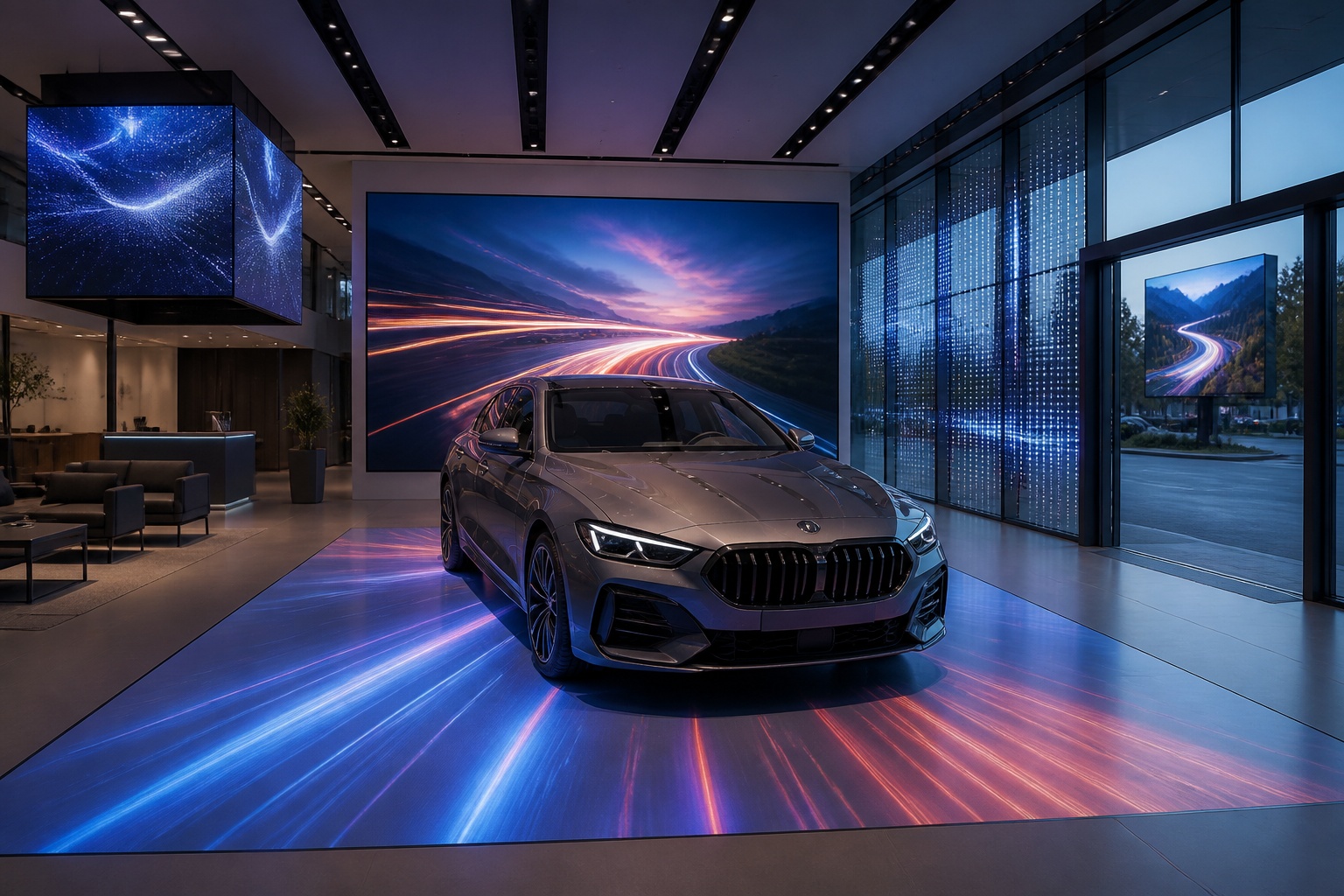
A B2B technical guide to selecting and combining fixed, floor, transparent, cube and other LED displays for automotive dealerships and 4S showrooms.
What LED Displays Can a 4S Dealership Use and How Should They Be Combined?
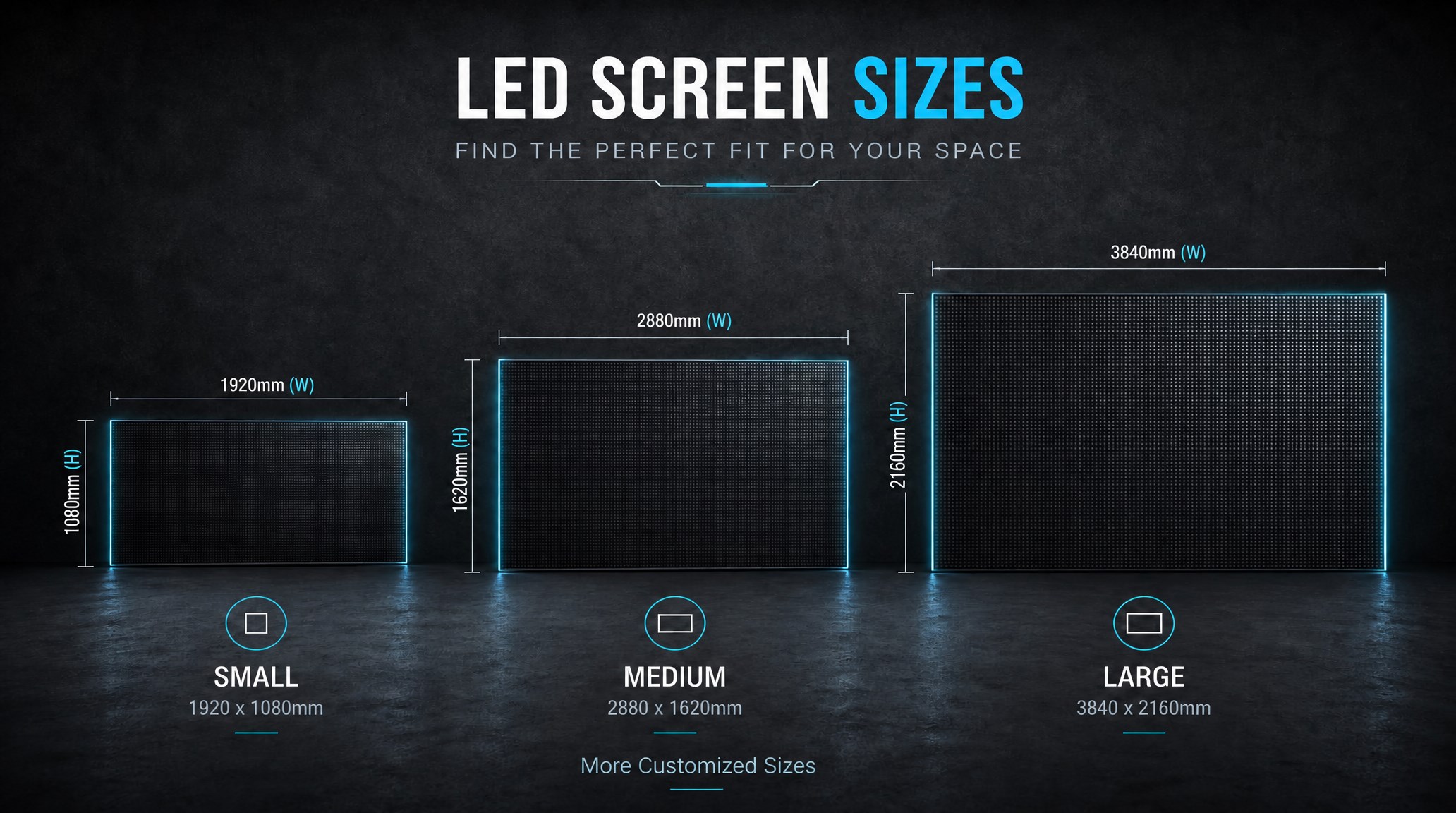
A practical guide explaining how to calculate LED display size, select pixel pitch, determine viewing distance, and choose suitable LED wall dimensions for commercial projects.
How to Choose the Right LED Display Size? Complete LED Screen Size Guide
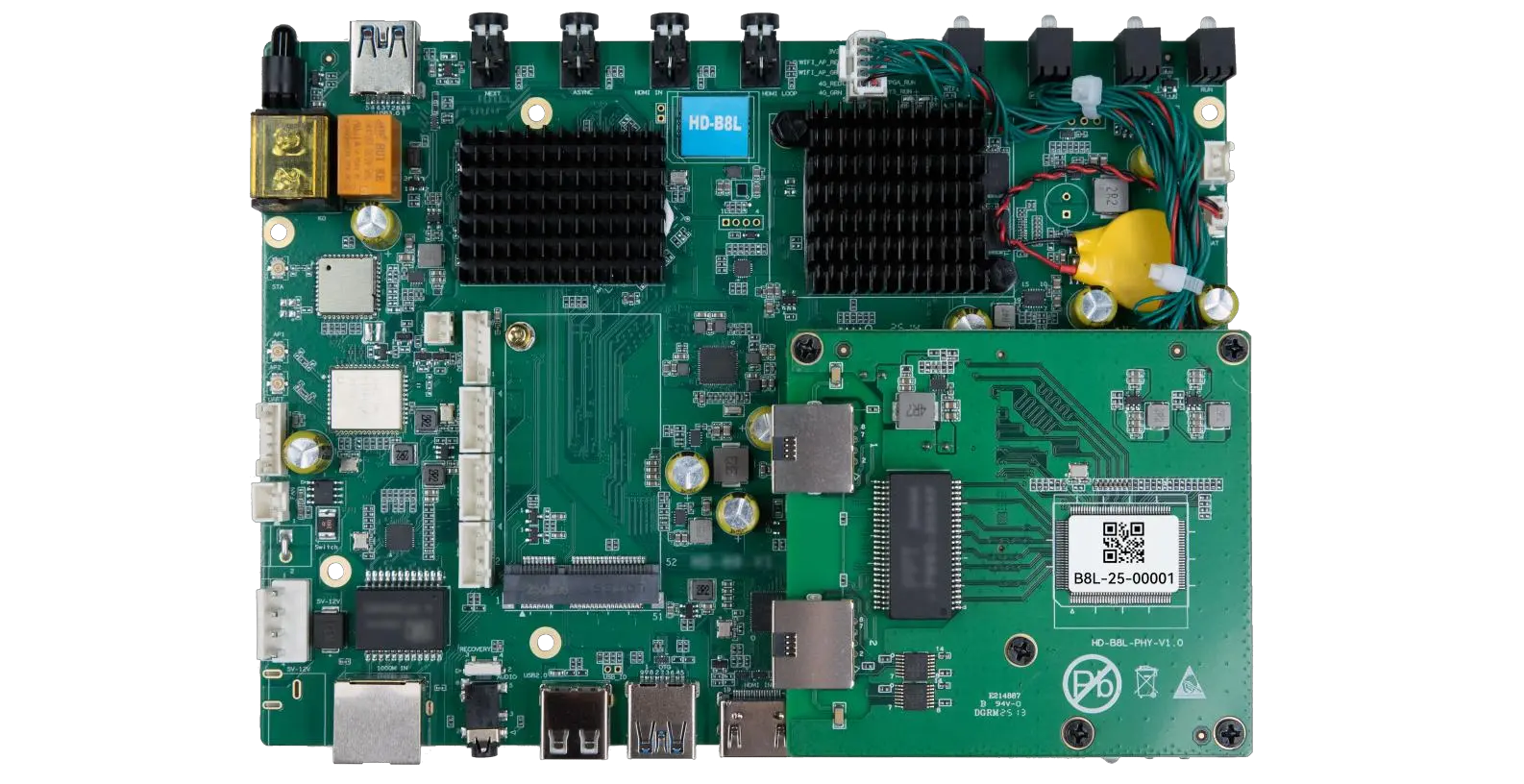
The HD-B8L Poster Screen Control System is an Android-based LED display controller designed for commercial LED poster displays and digital signage. It integrates media playback, asynchronous LED control, HDMI synchronization, network communication, and cloud management into one device, simplifying installation and centralized content management.
What Is the HD-B8L Poster Screen Control System? A Complete Technical Guide for Commercial LED Displays
Tell Us What Are You Looking For?
