
What Does LED Stand For? 2025 Complete Guide to LED Technology
2025-11-22
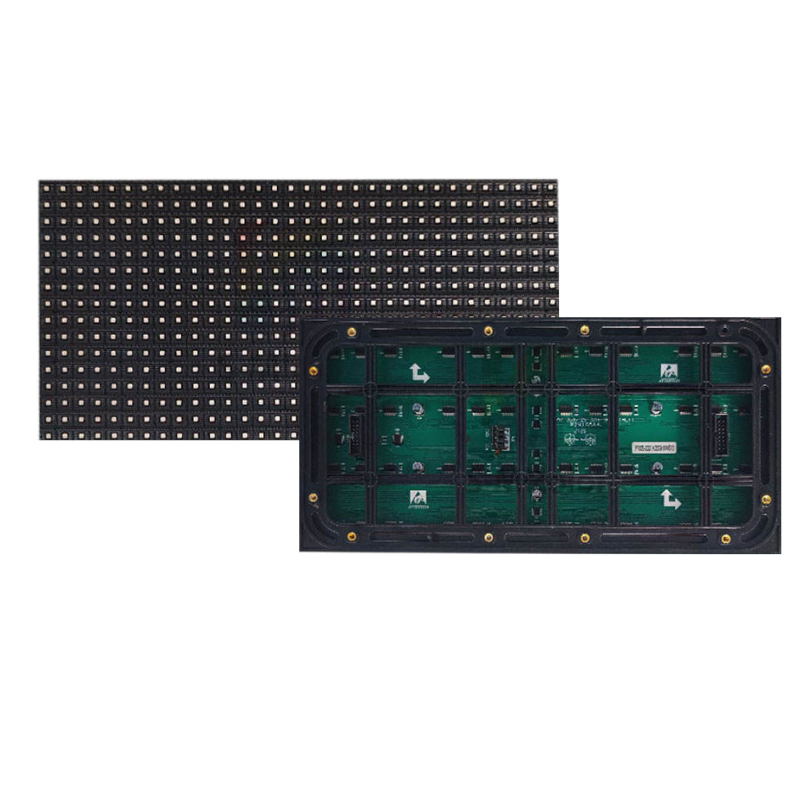
What Does LED Stand For? 2025 Complete Guide to LED Technology
If you’ve ever shopped for lighting, used a smartphone, or watched a screen, you’ve encountered LEDs—but you might still ask: what does led stand for? This tiny but powerful technology has revolutionized how we light our homes, power our devices, and experience visuals. In 2025, LEDs remain the backbone of energy-efficient lighting and display tech, but their full story goes beyond just the acronym. This guide answers what does led stand for while exploring how LEDs work, their history, applications, and future—essential for anyone curious about the tech shaping our daily lives.
1. What Does LED Stand For? Core Definition
Let’s start with the basics: what does led stand for? LED is an acronym for Light Emitting Diode. Break down each term, and you’ll understand its core function: A Diode is a semiconductor device that allows electricity to flow in only one direction. When electricity passes through this diode, it emits Light—hence “Light Emitting Diode.”
Unlike incandescent bulbs that generate light by heating a filament (and wasting most energy as heat) or fluorescent tubes that use gas, LEDs produce light through a process called electroluminescence. This makes them far more efficient and long-lasting. So, when someone asks what does led stand for, it’s not just a string of letters—it’s a clue to how the technology works: a diode that turns electricity directly into light.
2. How Do LEDs Work? A Simple Breakdown
Once you know what does led stand for, understanding how LEDs work becomes clearer. At their heart, LEDs are made of two layers of semiconductor material: a positively charged layer (p-type) and a negatively charged layer (n-type). When an electric current is applied, electrons from the n-type layer move to the p-type layer, combining with “holes” (missing electrons) in the process.
This combination releases energy in the form of photons—particles of light. The color of the light depends on the semiconductor material: Gallium arsenide produces red light, gallium phosphide makes green, and a mix creates blue (the base for white LEDs). Unlike traditional bulbs, LEDs don’t get hot because almost all energy goes into light, not heat. This efficiency is why LEDs have replaced older lighting technologies in most modern applications.
3. The History of LEDs: From Invention to Mainstream
The story of LEDs starts long before most people asked what does led stand for. In 1907, British scientist Henry Joseph Round first observed electroluminescence in a semiconductor, but practical LEDs took decades to develop. In 1962, Nick Holonyak Jr.—a researcher at General Electric—created the first visible red LED, earning him the title “Father of the LED.”
Early LEDs were dim and only emitted red light, used mainly as indicator lights in electronics. The 1990s brought a breakthrough: blue LEDs, developed by Shuji Nakamura (who won the Nobel Prize in 2014 for his work). Blue LEDs were crucial because they could be combined with phosphors to create white light. By the 2000s, white LEDs became affordable, and by 2020, they dominated the lighting market. Today, when we ask what does led stand for, we’re referring to a technology that has come from lab curiosity to global necessity.
4. LEDs vs. Traditional Lighting: Key Advantages
Knowing what does led stand for helps explain why LEDs outperform traditional lighting: Energy Efficiency: LEDs use 75–90% less energy than incandescent bulbs. A 10W LED bulb produces the same light as a 60W incandescent, cutting electricity bills significantly.
Long Lifespan: LEDs last 25–50 times longer than incandescents (50,000–100,000 hours vs. 1,000–2,000 hours). This means fewer bulb replacements and less waste. Durability: LEDs have no filaments or glass, making them resistant to shock, vibration, and temperature changes. Instant Light: Unlike fluorescent tubes that take time to warm up, LEDs turn on instantly at full brightness. Color Versatility: LEDs come in any color, including tunable white (adjustable from warm yellow to cool blue), making them ideal for homes, offices, and events.
5. Common Applications of LEDs in 2025
LEDs are everywhere—and once you know what does led stand for, you’ll start noticing them daily. Here are their top 2025 applications:
-
Lighting: Home recessed lights, smart bulbs (Alexa/Google-controlled), streetlights, and stadium floodlights all use LEDs. Cities like Los Angeles have saved $10 million annually by switching to LED streetlights.
-
Displays: Smartphones, TVs, computer monitors, and billboards rely on LED technology. 2025’s 8K LED TVs are thinner and brighter than ever, while transparent LED displays are used in store windows and building facades.
-
Electronics: Indicator lights on appliances, car dashboards, and chargers are LEDs—their small size and low power make them perfect for this role.
-
Specialized Uses: Medical devices (e.g., surgical lights), horticulture (LED grow lights for plants), and automotive (LED headlights that last longer and are brighter than halogen bulbs) all use LEDs.
6. 2025 LED Technology Trends to Watch
Beyond what does led stand for, LED tech is evolving fast. 2025 trends include:
Mini/Micro LEDs: These tiny LEDs (smaller than 0.1mm) create ultra-sharp displays with better contrast. They’re already used in high-end TVs and will soon be in smartphones and laptops.
Smart LED Systems: LEDs paired with sensors and AI can adjust brightness/color based on occupancy or natural light. For example, office LEDs dim when no one is in the room, saving more energy.
Biodegradable LEDs: Researchers are developing LEDs made from organic materials that break down naturally, reducing e-waste.
High-Power LEDs: New LEDs can produce more light without overheating, making them ideal for large-scale applications like stadiums and outdoor concerts.
7. How to Choose Quality LED Products: Practical Tips
Once you know what does led stand for and its benefits, choosing the right LED product is key. Here’s how:
-
Check Lumens, Not Watts: Lumens measure brightness (watts measure energy use). A 800-lumen LED bulb is equivalent to a 60W incandescent.
-
Look at Color Temperature: Warm white (2700K–3000K) is cozy for homes; cool white (4000K–5000K) is better for offices.
-
Check Certifications: Look for Energy Star (US) or CE (EU) certifications to ensure efficiency and safety.
-
Consider Dimmability: Not all LEDs are dimmable—check the product label if you want adjustable brightness.
-
Choose Reputable Brands: Brands like Philips, Cree, and GE make durable LEDs with longer warranties (3 years).
FAQ: Common Questions About LEDs
Q: What does LED stand for in simple terms? A: It stands for Light Emitting Diode—a small semiconductor device that turns electricity into light without wasting energy as heat.
Q: Are LEDs better for the environment? A: Yes—they use less energy (reducing carbon emissions) and last longer (reducing waste). Most LEDs are also mercury-free, unlike fluorescent bulbs.
Q: Can LEDs be used outdoors? A: Yes—look for outdoor-rated LEDs with IP65/IP67 waterproofing. They work well for patio lights, security lights, and holiday decorations.
Q: Do LEDs fade over time? A: LEDs “age” by dimming slightly over years, but this is gradual. A 50,000-hour LED will still be 70% as bright after that time.
Conclusion
Answering what does led stand for—Light Emitting Diode—is just the start of understanding a technology that has transformed our world. From its early days as a dim red indicator to 2025’s smart, ultra-efficient LEDs, this tech has proven its value in lighting, displays, and beyond.
LEDs aren’t just about saving energy or money—they’re about innovation: enabling 8K TVs, smart homes, and sustainable cities. As trends like Mini LEDs and biodegradable LEDs grow, LEDs will keep shaping how we live and work. The next time you flip an LED switch or look at your phone screen, remember: behind that light is a simple acronym with a powerful impact.
Whether you’re shopping for bulbs, upgrading your TV, or just curious about tech, knowing what does led stand for and its basics helps you make smarter choices. LEDs are here to stay, and their future is brighter than ever.
Jumbotron vs LED Billboard: Differences, Uses & Advertising Guide | JunChen Display
What Is a Jumbotron? 2025 Ultimate Guide to Giant LED Displays
Related Article

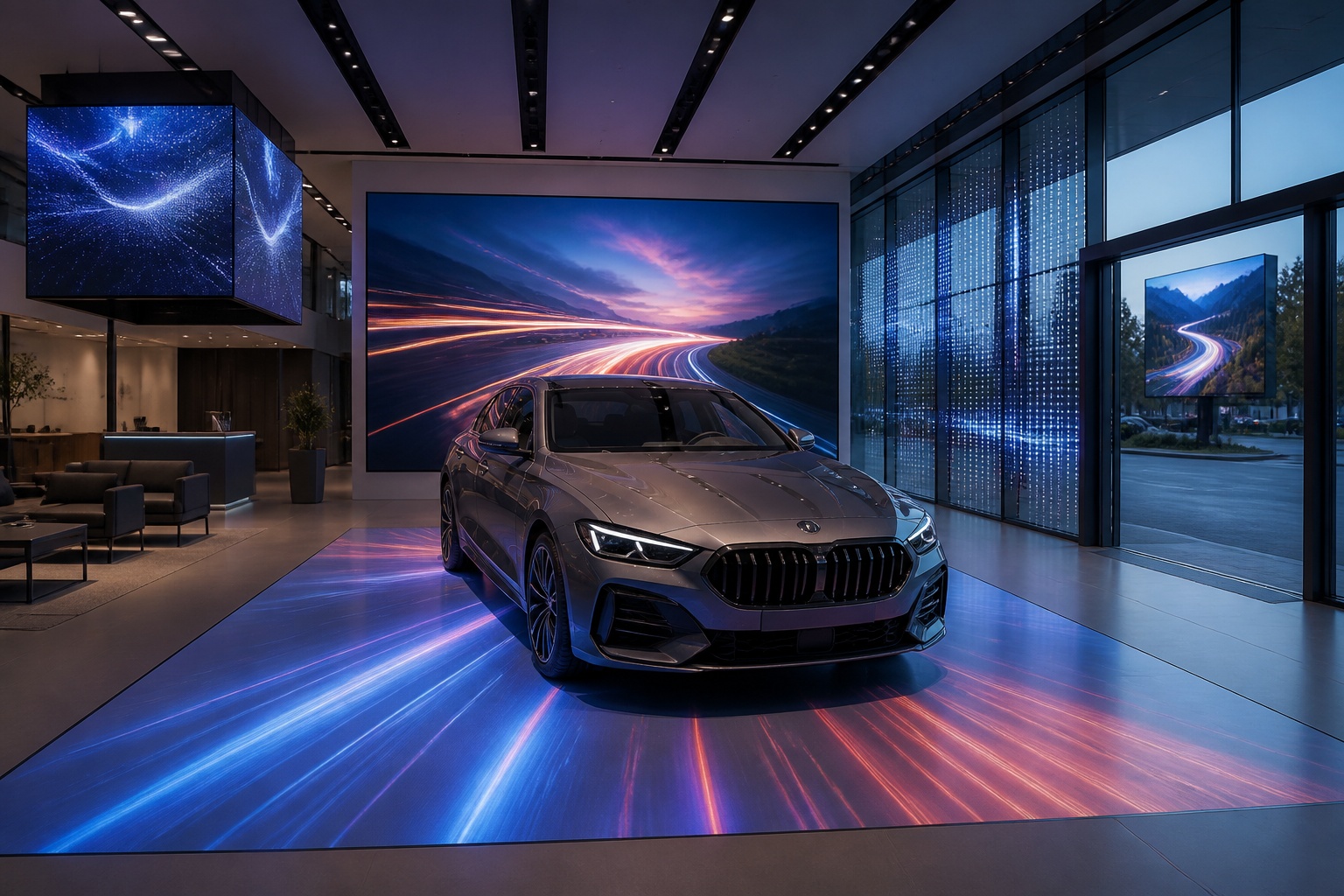
A B2B technical guide to selecting and combining fixed, floor, transparent, cube and other LED displays for automotive dealerships and 4S showrooms.
What LED Displays Can a 4S Dealership Use and How Should They Be Combined?
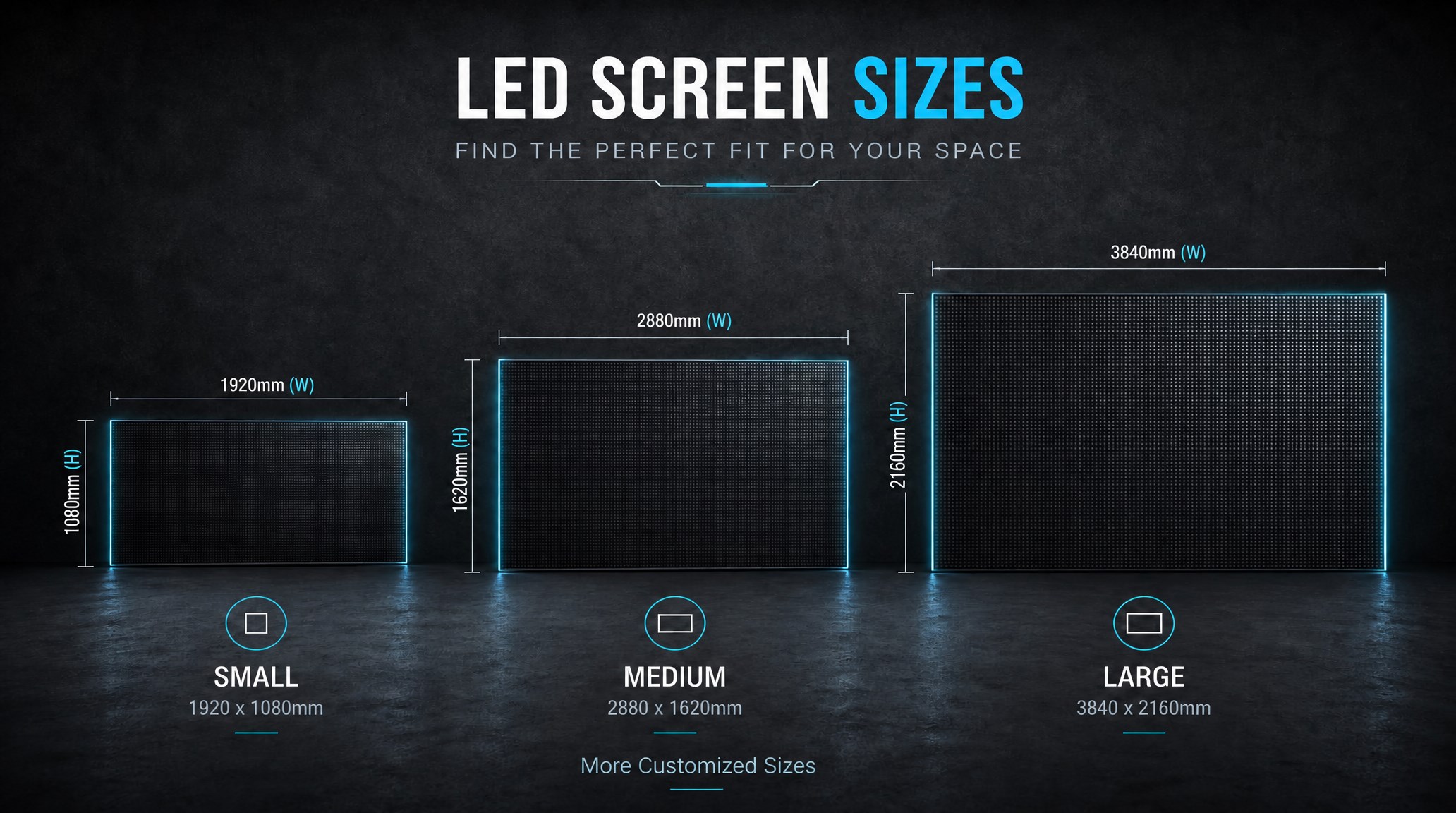
A practical guide explaining how to calculate LED display size, select pixel pitch, determine viewing distance, and choose suitable LED wall dimensions for commercial projects.
How to Choose the Right LED Display Size? Complete LED Screen Size Guide

The HD-B8L Poster Screen Control System is an Android-based LED display controller designed for commercial LED poster displays and digital signage. It integrates media playback, asynchronous LED control, HDMI synchronization, network communication, and cloud management into one device, simplifying installation and centralized content management.
What Is the HD-B8L Poster Screen Control System? A Complete Technical Guide for Commercial LED Displays
Tell Us What Are You Looking For?
