
SMD vs COB: Which LED Technology is Better?
2026-03-07
SMD vs COB: Which LED Technology is Better?
Table of Contents
- Introduction: SMD vs COB – The Core LED Technology Debate
- What Are SMD and COB LED Technologies?
- SMD vs COB: Key Differences (Side-by-Side Comparison)
- Top Applications for SMD vs COB LED Displays
- How to Choose Between SMD vs COB for Your Project
- FAQ About SMD vs COB & Cob LED Display
- Conclusion: SMD vs COB – Which Is Right for You?
1. Introduction: SMD vs COB – The Core LED Technology Debate
SMD vs COB is one of the most critical decisions when selecting an LED display, as packaging technology directly impacts performance, durability, and cost.Cob led display and SMD solutions each have distinct advantages, making the choice dependent on your project’s specific needs, environment, and budget.
The rise of fine-pitch displays and demanding applications has intensified the SMD vs COB conversation.Cob led display is gaining traction for high-end use cases, while SMD remains the mainstream choice for cost-effective, versatile solutions.
2. What Are SMD and COB LED Technologies?
SMD (Surface-Mounted Device) LED
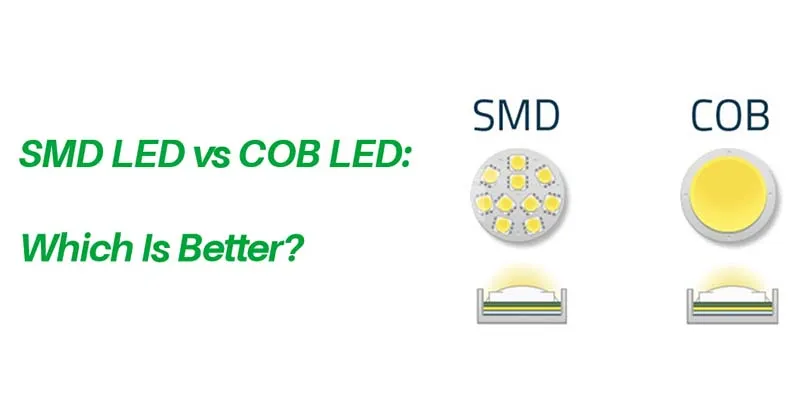
SMD LED packages red, green, and blue chips into a small plastic casing, which is then mounted directly onto a PCB using surface-mount technology.This mature process enables mass production, making SMD displays widely accessible for diverse applications.
COB (Chip-on-Board) LED
COB LED technology mounts multiple LED chips directly onto the PCB and encapsulates them in epoxy resin, creating a seamless surface light source.Cob led display delivers superior uniformity, heat dissipation, and protection compared to traditional SMD designs.
3. SMD vs COB: Key Differences (Side-by-Side Comparison)
Understanding the technical gaps between SMD vs COB is essential to choosing the right solution.The comparison below breaks down core parameters for clear evaluation, with a focus on cob led display advantages:
| Parameter | SMD LED Display | COB LED Display |
|---|---|---|
| Pixel Pitch Range | P1.2 – P10+ (mainstream) | P0.4 – P1.5 (ultra-fine pitch capable) |
| Brightness | 800–5,000 nits (indoor); 5,000–10,000+ nits (outdoor) | 600–3,000 nits (indoor); less suited for high-brightness outdoor use |
| Contrast Ratio | 1,000:1 – 10,000:1 (premium) | 5,000:1 – 25,000+:1 (superior blacks from black epoxy) |
| Viewing Angle | H:140°–160° / V:120°–140° | H:160°–170° / V:150°–160° (wider, more consistent) |
| Durability | Exposed chips; IP40–IP65 (with added enclosure) | Sealed resin; IP65–IP68 inherent; 5× stronger impact resistance |
| Heat Dissipation | Average (via PCB/casing; needs heat sinks for dense pitches) | Excellent (direct chip-to-PCB contact; no hotspots) |
| Repairability | Easy (individual lamp beads replaceable) | Complex (entire module replacement required) |
| Cost | Lower (mature supply chain, mass production) | 20–40% higher (premium precision manufacturing) |
| Lifespan | 50,000 – 80,000 hours | 80,000 – 100,000 hours (sealed encapsulation) |
4. Top Applications for SMD vs COB LED Displays
When to Choose SMD LED
SMD excels in scenarios where cost, brightness, and easy maintenance are priorities.Outdoor billboards, stage rental screens, and large stadium displays (P4–P10) benefit from SMD’s high brightness and low repair costs.
Retail signage, mall atria, and conference exhibition screens also favor SMD.Its mature technology and replaceable components minimize downtime for high-traffic, frequently used displays.
When to Choose COB LED Display
Cob led display is ideal for high-end indoor applications requiring precision and durability.Control rooms, broadcast studios, and XR stages rely on its ultra-fine pitch (P0.4–P0.9), moiré suppression, and eye-friendly surface light.
Premium showrooms, museums, and smart teaching spaces also benefit from cob led display.Seamless splicing, deep contrast, and dust/water resistance make it perfect for close-up viewing and long-duration use.
5. How to Choose Between SMD vs COB for Your Project
Selecting between SMD vs COB depends on 5 core factors—use these guidelines to decide:
- Viewing Distance: Choose cob led display for close viewing (≤5m) to avoid pixelation; SMD works for mid-to-long distances (≥3m).
- Environment: Cob led display is better for harsh or high-traffic areas (IP65+ protection); SMD suits controlled environments.
- Budget: Opt for SMD if cost is a priority; invest in cob led display for premium performance and longevity.
- Maintenance Access: SMD is better for hard-to-reach locations (easy on-site repairs); cob led display needs manufacturer support.
- Visual Requirements: Cob led display delivers superior contrast and uniformity for critical content (data, broadcast); SMD meets standard needs.
6. FAQ About SMD vs COB & Cob LED Display
Q1: Is cob led display better than SMD for indoor use?
Cob led display is superior for fine-pitch indoor applications (P0.9 or below) like control rooms and studios.SMD remains cost-effective for general indoor use (P1.2+) with similar brightness and easier maintenance.
Q2: Can cob led display be used outdoors?
Cob led display is less suited for traditional outdoor use, as it struggles to reach the 5,000+ nits needed for sunlight visibility.SMD is the preferred choice for outdoor billboards and stadium screens.
Q3: What is the main disadvantage of cob led display?
Cob led display requires module replacement for repairs (no individual pixel fixes), leading to higher maintenance costs and downtime.SMD avoids this with replaceable lamp beads.
Q4: Is SMD vs COB the same as LED vs COB?
No—SMD and COB are both LED packaging technologies, not separate light sources.The SMD vs COB debate focuses on packaging methods, not the LED itself.
Q5: Will cob led display replace SMD in the future?
Cob led display will dominate high-end and fine-pitch markets, but SMD will remain mainstream for cost-sensitive and outdoor applications.Both technologies will coexist as they serve distinct needs.
7. Conclusion: SMD vs COB – Which Is Right for You?
SMD vs COB is not a “better or worse” choice, but a “right for your project” decision.SMD excels in cost, outdoor brightness, and repairability, while cob led display delivers superior precision, durability, and visual quality.
For outdoor advertising, rental events, or budget-conscious projects, SMD is the reliable choice.For control rooms, broadcast studios, or premium indoor displays, cob led display justifies its higher cost with long-term value and performance.
By aligning SMD vs COB with your viewing distance, environment, and budget, you’ll select an LED technology that maximizes performance and ROI.Whether you choose SMD or cob led display, prioritize quality manufacturing to ensure longevity and consistent results.
30% Energy-Saving Custom LED Displays – Your Smart Choice for Sustainable Visual Solutions
JunChen Display Launches New LED Letter Display & 3D LED Letter: Redefining Brand Signage Standards



Tell Us What Are You Looking For?
