
Minimizing LED Screen Splicing Gaps: 2026 Seamless Display Technical Handbook
2026-03-29

Table of Contents
Splicing gaps are the physical or visual spaces between LED display modules, which break image continuity and reduce viewer immersion.
For commercial applications like shopping mall billboards or control rooms, even 1mm gaps can distract audiences and undermine the display’s professional quality.
The goal of modern LED technology is to minimize these gaps to 0.5mm or less—and in cutting-edge cases, achieve complete visual seamlessness.
2.1 Ultra-Narrow Bezel LED Modules
- Choose LED modules with bezel widths ≤1.5mm (indoor) or ≤3mm (outdoor) to directly reduce physical gaps.
- Indoor micro-pitch LED (P1.2-P1.8) typically achieves splicing gaps to precision-machined aluminum frames.
2.2 Modular Design & Locking Mechanisms
- High-precision CNC-machined male-female buckles ensure module alignment with ±0.1mm accuracy.
- Magnetic adsorption or six-axis adjustment screws enable fine-tuning for perfect surface flatness.
2.3 COB Encapsulation Technology
- Chip-on-Board (COB) eliminates gaps caused by traditional SMD packages, achieving near-zero physical gaps (≈0mm).
- COB’s integrated surface light source also reduces visual discontinuity compared to discrete SMD LED chips.
Follow this workflow to ensure minimal splicing gaps:
- Pre-Installation Preparation
- Inspect the installation surface for flatness (allowable error ≤1mm/m²) using a laser level.
- Verify LED modules for warpage—reject any units with curvature exceeding 0.2mm.
- Frame Assembly
- Use aluminum or steel brackets with adjustable feet to support 1.5x the total display weight (for stability).
- Ensure the frame is level horizontally and vertically (deviation .3mm).
- Module Alignment
- Start splicing from the center and work outward to maintain symmetry across the entire display.
- Use feeler gauges to measure gaps—adjust via module back screws until gaps are uniform.
- Fixation & Stress Relief
- Tighten screws in a diagonal sequence to avoid module deformation during installation.
- Leave 0.1mm thermal expansion gaps for outdoor displays (per 10m length) to accommodate temperature changes.
Even small physical gaps can be "hidden" with advanced software tools:
- Edge Blending: Overlap 10-20 pixels across module edges to mask minor physical gaps visually.
- Color & Brightness Calibration: Use professional tools to ensure ΔE and brightness variation between adjacent modules.
- Synchronization Control: Adopt PTP clock protocol for 3840Hz+ refresh rates, eliminating frame tearing that accentuates gaps.
|
Technology
|
Physical Gap Range
|
Visual Seamlessness
|
Best For
|
|
SMD (2020/3535 Packages)
|
0.8-2mm
|
Moderate
|
Outdoor billboards, budget-conscious projects
|
|
COB Encapsulation
|
0-0.5mm
|
Excellent
|
Control rooms, high-end exhibitions, indoor signage
|
|
Micro LED
|
0mm
|
Perfect
|
Virtual production studios, luxury retail, premium venues
|
Data source: 2026 LED Display Industry Standards & Product Testing Reports
Q1: Why do splicing gaps widen after installation?
A1: Thermal expansion (temperature changes >10°C) or loose brackets are the main causes—use anti-deformation frames and pre-reserve thermal expansion gaps.
Q2: Can existing LED screens reduce splicing gaps without full replacement?
A2: Yes—upgrade to ultra-narrow bezel modules, re-calibrate with edge blending software, and reinforce the supporting frame for better stability.
Q3: What’s the minimum achievable gap for outdoor LED displays?
A3: 0.8-1mm with high-precision SMD modules; 0.5mm with IP54-rated COB technology (designed for weather resistance).
Minimizing LED screen splicing gaps requires a synergistic combination of hardware innovation, precise installation, and software optimization.
For 2026 projects, prioritize COB or ultra-narrow bezel LED modules, follow strict installation protocols, and invest in professional calibration tools.
By integrating these elements, you can achieve gaps as small as 0.5mm—or even visual seamlessness—elevating your LED display’s impact and professional appeal.
Need personalized advice for your project? Contact our technical team for customized seamless LED display solutions!
JunChen Display Spain GOB P1.953 Indoor Rental LED Display
How to Choose Exhibition LED Display Without Waste: Parameters & Scenarios Guide 2026
Related Article

A B2B technical guide to selecting and combining fixed, floor, transparent, cube and other LED displays for automotive dealerships and 4S showrooms.
What LED Displays Can a 4S Dealership Use and How Should They Be Combined?
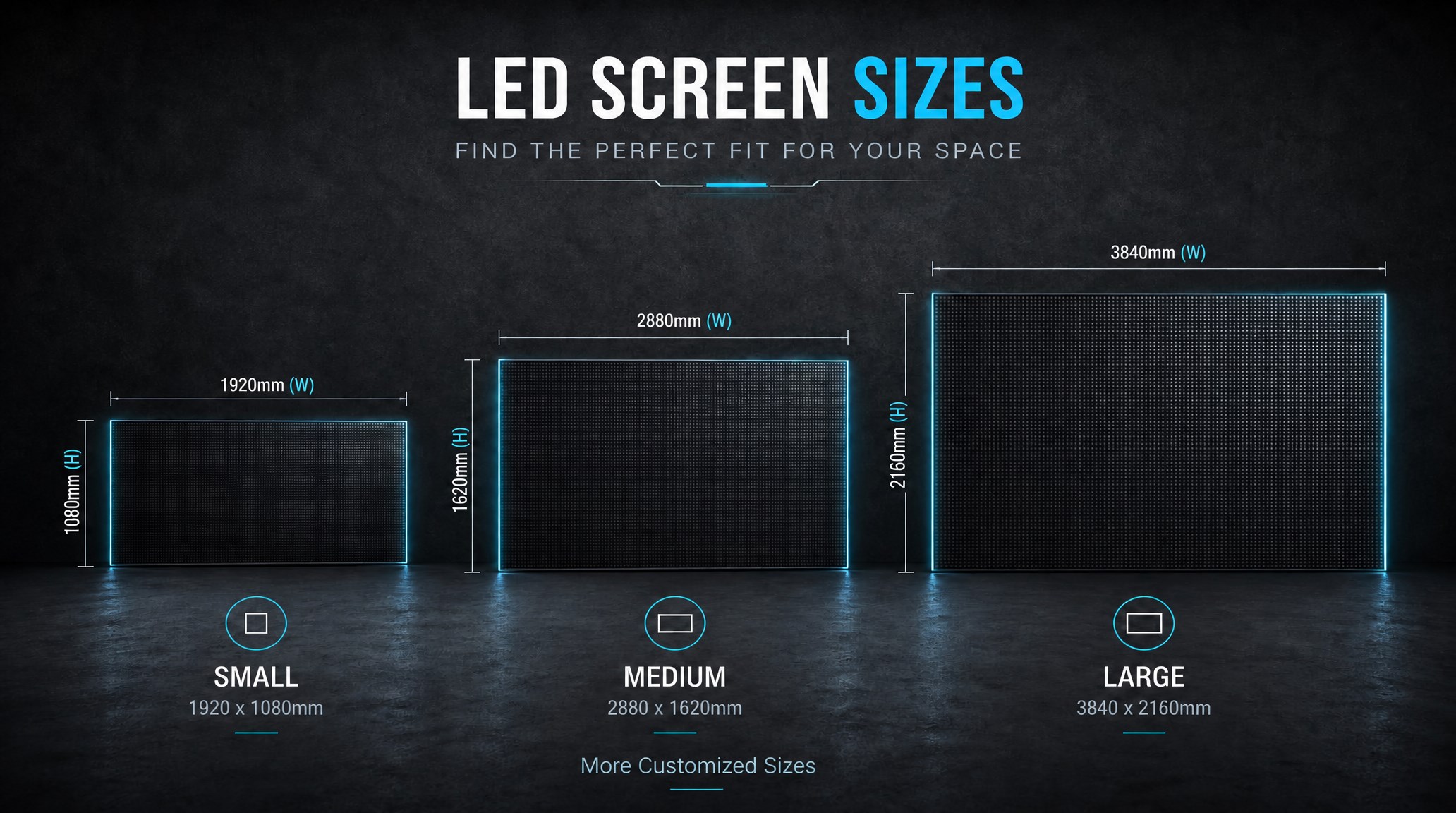
A practical guide explaining how to calculate LED display size, select pixel pitch, determine viewing distance, and choose suitable LED wall dimensions for commercial projects.
How to Choose the Right LED Display Size? Complete LED Screen Size Guide
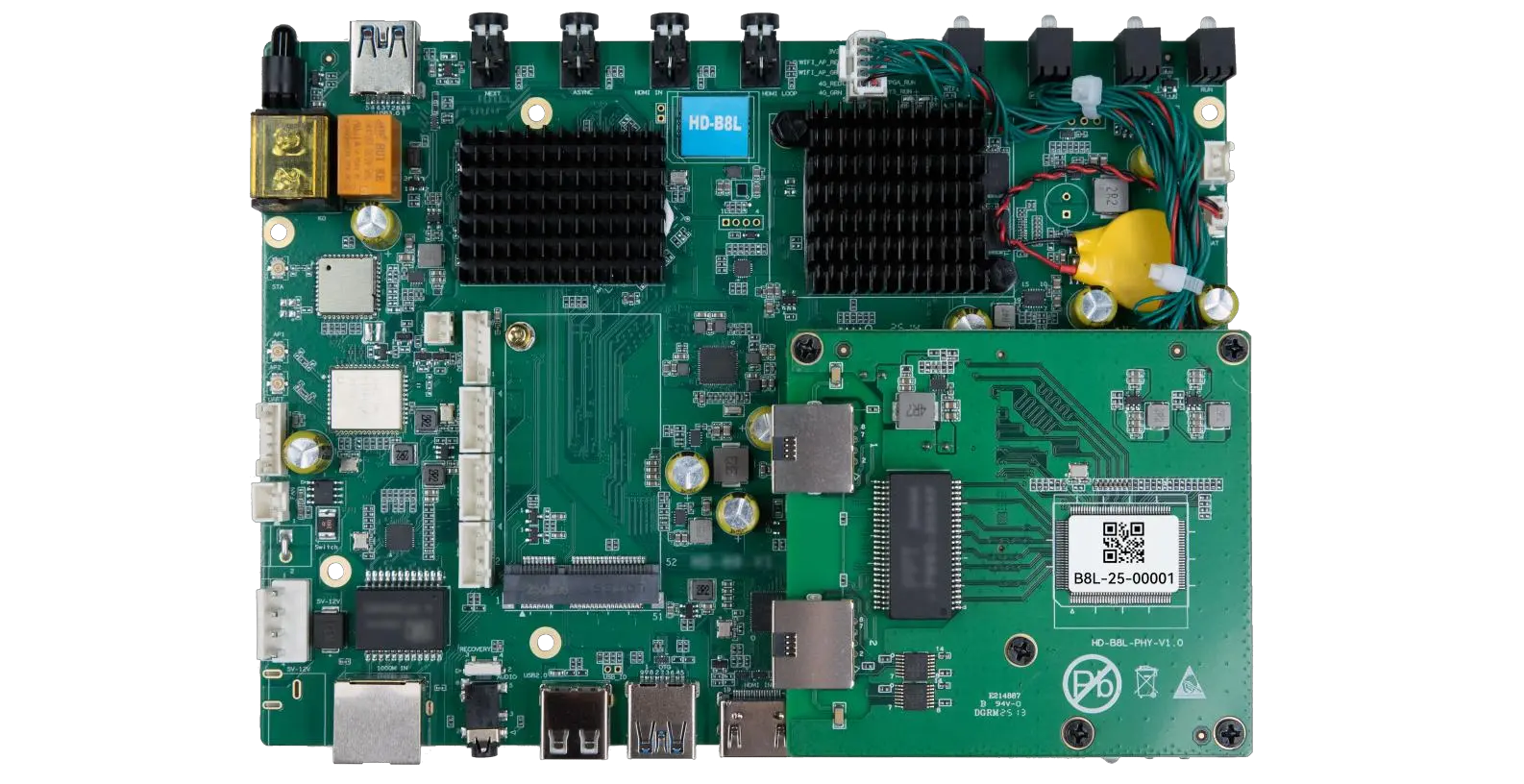
The HD-B8L Poster Screen Control System is an Android-based LED display controller designed for commercial LED poster displays and digital signage. It integrates media playback, asynchronous LED control, HDMI synchronization, network communication, and cloud management into one device, simplifying installation and centralized content management.
What Is the HD-B8L Poster Screen Control System? A Complete Technical Guide for Commercial LED Displays
Tell Us What Are You Looking For?
