
How Do LED Displays Work? Simple Guide for Beginners

How Do LED Screen Displays Work? Simple Guide for Beginners (With Buying Tips)
Ever wondered how giant billboards or concert screens light up? LED screen displays make it happen! These screens are bright, energy-efficient, and perfect for both indoor and outdoor use. In this guide, we’ll explain how LED screen displays work in plain English and share tips to help you choose the best one.
1. What Is an LED Screen Display?
An LED screen display is a grid of tiny light-emitting diodes (LEDs). Each LED acts like a colored dot (pixel), mixing red, green, and blue light to create images.
2. How Do LED Screen Displays Work? 3 Easy Steps
Step 1: Receive Video Signals
The LED screen display connects to a computer or media player. It breaks down the video into commands like “Pixel (1,5): Red at 50%.”
Step 2: Adjust Brightness & Colors
-
PWM Dimming: LEDs flicker rapidly to control brightness (e.g., 50% flicker = half-brightness).
-
RGB Mixing: Combine red, green, and blue light to make colors (e.g., red + green = yellow).
Step 3: Refresh the Image
The LED screen display updates 60–1,000 times per second (refresh rate). Higher refresh rates = smoother motion.
3. Why Choose LED Screen Displays? Top 3 Benefits
-
Ultra-Bright: Perfect for outdoor LED screen displays (5,000+ nits for sunlight visibility).
-
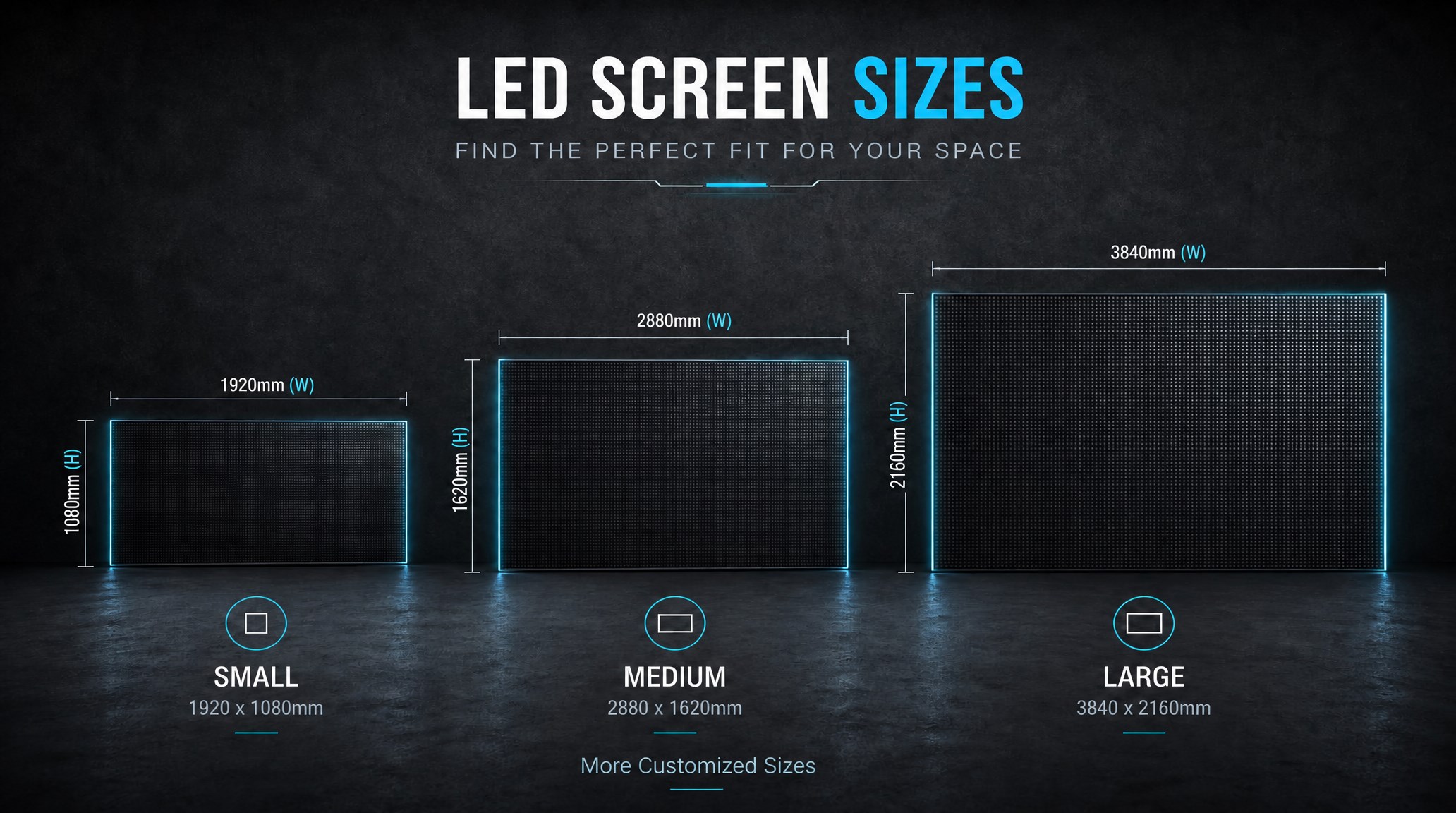
Custom Sizes: Combine panels seamlessly for any size (no bezels!).
-
Long Life: Lasts 50,000+ hours (over 5 years of daily use).
4. How to Choose an LED Screen Display: 4 Key Factors
-
Pixel Pitch (P-number):
-
Smaller = sharper (e.g., P2 LED screen display vs. P10). Indoor: P1.5–P3; Outdoor: P6–P10.
-
-
Brightness:
-
Indoor: 800–1,500 nits; Outdoor LED screen display: 5,000+ nits.
-
-
Refresh Rate:
-
Basic use: 1,920Hz; Live events: 3,840Hz+ (avoids camera black lines).
-
-
IP Rating:
-
Outdoor LED screen displays need IP65 (waterproof/dustproof).
-
5. FAQ: LED Screen Display Basics
Q1: LED Screen Display vs. LCD TV: What’s Better?
-
LED screen displays are brighter, customizable, and last longer. TVs are cheaper for small sizes.
Q2: Can LED Screen Displays Be Repaired?
-
Yes! Single pixels or modules can be replaced.
Q3: Why Does My LED Screen Display Look Grainy?
-
Large pixel pitch! Use this rule: Best viewing distance (meters) = Pixel pitch (mm) × 2.
6. Future Trends in LED Screen Display Technology
-
Mini LED Screen Displays: Sharper images (used in premium TVs and tablets).
-
Transparent LED Screen Displays: Turn windows into ads.
-
Smart Controls: Voice commands or gestures to operate screens.
Conclusion
Now you know how LED screen displays work and what to look for when buying one. Whether you need an outdoor LED screen display for ads or a P2 LED screen display for a conference room, this guide has you covered!
How do you download the control software for an LED display?
What is NovaLCT? Learn about LED display control software in 3 minu
Related Article

Tell Us What Are You Looking For?
