
Largest Jumbotron in the World: A Complete Guide to Jumbotrons & LED Screens
2025-09-19
Largest Jumbotron in the World: A Complete Guide to Jumbotrons & LED Screens
If you’ve ever attended a stadium concert, sports game, or large-scale event, you’ve probably seen a massive screen displaying replays, ads, or live feeds—and wondered: “what is a jumbotron?” Or maybe you’ve heard terms like “largest jumbotron in the world” or “world biggest led screen” and wanted to know the difference. This guide breaks down everything you need to know: from jumbotron meaning to the details of the largest jumbotron in the world, and how jumbotrons stack up against regular LED screens.
Table of Contents
- What Is a Jumbotron? (Clarifying Jumbotron Meaning)
- The Largest Jumbotron in the World: Key Details & Location
- Largest Jumbotron in the World vs. World Biggest LED Screen: What’s the Difference?
- Why Does the Largest Jumbotron in the World Matter? (Practical Value)
- How to Choose a Jumbotron (or LED Screen) for Your Event
- Common Myths About Jumbotrons Debunked
1. What Is a Jumbotron? (Clarifying Jumbotron Meaning)
Let’s start with the basics to answer “what is a jumbotron” and define jumbotron meaning. First, jumbotron meaning isn’t just “a big screen”—it’s a specific type of large-format display (LFD) originally developed by Sony in 1985 for sports stadiums. To put it simply: jumbotron meaning refers to a high-brightness, high-resolution LED screen designed for outdoor or large indoor spaces, built to be visible even from long distances (like the back of a stadium).
So, when someone asks “what is a jumbotron?”, you can explain it’s not just any big screen—it’s engineered for visibility, durability, and crowd engagement. For example:
- A jumbotron at a football stadium needs to be bright enough to cut through sunlight so fans in the upper seats can see replays clearly.
- A jumbotron at a music festival must withstand rain, wind, or extreme temperatures (unlike a regular TV or small LED screen).
Key traits that define jumbotron meaning:
- Size: Typically 10 feet or larger (smaller screens are usually called “LED displays,” not jumbotrons).
- Brightness: 5,000+ nits (to combat sunlight—regular indoor screens are 200–500 nits).
- Durability: Weatherproof (for outdoor use) or dust-resistant (for indoor stadiums).
- Resolution: Designed for “distance viewing”—you don’t need 4K up close, but it needs sharpness from 100+ feet away.
2. The Largest Jumbotron in the World: Key Details & Location
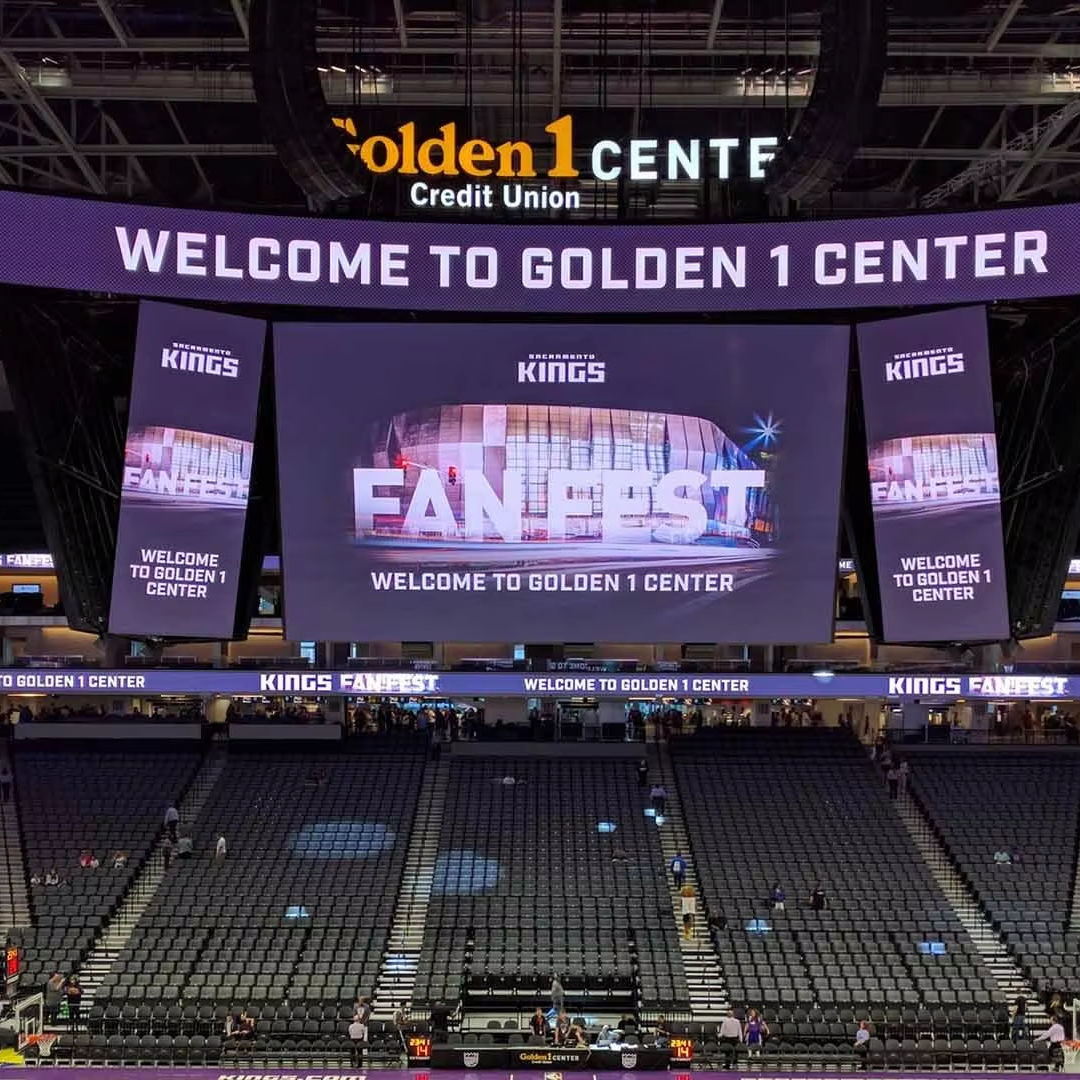
Now that you understand jumbotron meaning and “what is a jumbotron,” let’s dive into the star: the largest jumbotron in the world. As of today, the title belongs to the AT&T Stadium Video Board (home of the NFL’s Dallas Cowboys) in Arlington, Texas, USA—but it’s not just one screen: it’s a 1.6-million-pound “video ring” surrounding the field, with the main displays being the largest single jumbotron panels.
Here’s why it’s the largest jumbotron in the world:
- Size: The two main center screens (above the field) are each 72 feet tall and 160 feet wide—total area of 11,520 square feet per screen. If you laid them flat, they’d cover more than a quarter of a football field.
- Resolution: 4K (3840x2160) per screen, with 10.5 million pixels total—enough to display crisp replays, live stats, and even 360-degree footage of the crowd.
- Technology: Uses LED “micro-pixels” (smaller than a grain of rice) for better color accuracy, even in direct sunlight. It’s also synced with the stadium’s sound system, so audio and video are perfectly aligned for every seat.
What makes the largest jumbotron in the world stand out? It’s not just big—it’s functional. During Cowboys games, it shows instant replays from 12 different camera angles, displays player stats in real time, and even interacts with fans (e.g., showing “wave” challenges or fan signs). For concerts (like Taylor Swift’s Eras Tour), it transforms into a dynamic backdrop, with visuals that match the music and lighting.
3. Largest Jumbotron in the World vs. World Biggest LED Screen: What’s the Difference?
Many people mix up “largest jumbotron in the world” and “world biggest led screen”—but they’re not the same. Let’s clarify the key differences to avoid confusion:
| Factor | Largest Jumbotron in the World | World Biggest LED Screen |
|---|---|---|
| Definition | A purpose-built, high-brightness LED screen for events (stadiums, concerts) | Any large LED screen (can be for advertising, art, or architecture) |
| Location | Usually in stadiums or event venues (e.g., AT&T Stadium) | Can be on buildings, highways, or public spaces (e.g., the LED screen on the Dubai Mall facade) |
| Function | Focused on crowd engagement (replays, stats, live feeds) | Often for advertising, art, or information (e.g., showing news or ads) |
| Durability | Built for heavy use (daily events, weather) | Varies—some are indoor-only or less rugged |
For example: The Dubai Mall has a 1,000-foot-wide LED screen on its exterior—it’s the “world biggest led screen” by width, but it’s not a jumbotron (it’s for advertising, not event engagement). The AT&T Stadium screen, by contrast, is the “largest jumbotron in the world” because it’s designed for live events, with features like 4K resolution and weather resistance that regular LED screens lack.
In short: All jumbotrons are LED screens, but not all large LED screens are jumbotrons. The “largest jumbotron in the world” is a subset of “world biggest led screen”—focused on event-specific functionality.
4. Why Does the Largest Jumbotron in the World Matter? (Practical Value)
You might wonder: Why does the largest jumbotron in the world matter? It’s not just a “flex”—it adds real value to events, businesses, and audiences. Here’s how:
For Event Attendees
The largest jumbotron in the world solves a common problem: “bad seats.” Even if you’re in the upper deck of a 100,000-seat stadium, the jumbotron lets you see every detail—from a player’s facial expression to a singer’s hand movements. It also boosts engagement: when the jumbotron shows a “kiss cam” or “dance-off,” the whole crowd joins in, making the event feel more inclusive.
For Businesses & Venues
Venues with the largest jumbotron in the world (or even smaller jumbotrons) can charge more for tickets, attract bigger events, and sell more ads. For example, AT&T Stadium’s jumbotron has 20+ ad slots per game, with brands like Coca-Cola and Verizon paying top dollar to reach 80,000+ fans. It also makes the venue a “destination”—people travel to see the largest jumbotron in the world, even if they’re not die-hard Cowboys fans.
For Technology Innovation
The largest jumbotron in the world pushes LED technology forward. To build a screen that’s 160 feet wide and 4K, engineers had to develop smaller, brighter, and more energy-efficient LEDs. These innovations trickle down to smaller jumbotrons (and even regular TVs)—making them cheaper and better for everyday use.
5. How to Choose a Jumbotron (or LED Screen) for Your Event
If you’re planning an event (like a local sports game, concert, or festival) and want a jumbotron (or LED screen), here’s how to choose—without needing the “largest jumbotron in the world”:
Step 1: Start with Your Space
- Indoor vs. Outdoor: Outdoor events need a jumbotron (weatherproof, 5,000+ nits); indoor events can use a smaller LED screen (2,000–3,000 nits).
- Distance: If attendees are 50+ feet away, choose a jumbotron with at least 1080p resolution; closer crowds can use 720p.
Step 2: Match to Your Budget
- The largest jumbotron in the world costs $40+ million, but small jumbotrons (10x20 feet) rent for $1,000–$5,000 per event.
- If you can’t afford a jumbotron, a “world biggest led screen” alternative (like a portable LED wall) works for small events (100–500 people).
Step 3: Prioritize Key Features
- Brightness: Outdoor = 5,000+ nits; indoor = 2,000+ nits.
- Durability: Outdoor jumbotrons need IP65 rating (dust/waterproof); indoor ones need IP54 (dust-resistant).
- Connectivity: Ensure it syncs with your camera, sound system, and Wi-Fi (for live updates).
6. Common Myths About Jumbotrons Debunked
To help you make informed decisions, let’s debunk 3 common myths about jumbotrons—tied to jumbotron meaning and the largest jumbotron in the world:
Myth 1: “The largest jumbotron in the world is just a ‘bigger TV’.”
False. A jumbotron is engineered for crowd viewing—TVs are for homes. The largest jumbotron in the world has brighter LEDs, wider viewing angles, and more durable hardware than any home TV.
Myth 2: “Jumbotrons are only for sports.”
False. Jumbotrons are used for concerts, festivals, political rallies, and even corporate events. For example, Apple uses jumbotrons at its product launches to show demos to 10,000+ attendees.
Myth 3: “The world biggest led screen is always better than a jumbotron.”
False. If you’re hosting an event, a jumbotron’s features (weather resistance, crowd-focused resolution) matter more than size. A 10-foot jumbotron is better for a stadium than a 100-foot LED ad screen.
Conclusion
To wrap up: We answered “what is a jumbotron” and clarified jumbotron meaning (a durable, high-brightness LED screen for events), explored the largest jumbotron in the world (AT&T Stadium’s 160-foot screen), and distinguished it from the world biggest led screen (which focuses on size over event functionality).
The largest jumbotron in the world isn’t just a technical feat—it’s a tool that makes events more engaging, inclusive, and profitable. Even if you don’t need the “largest,” understanding jumbotron meaning helps you choose the right screen for your event, whether it’s a local game or a global concert.
Next time you see a massive screen at an event, you’ll know: Is it a jumbotron? Could it be the largest jumbotron in the world? And most importantly—how does it make the experience better for everyone there?
What Is Indicated by the Contrast Ratio of a Monitor? Complete Guide
What Is DCR on a Monitor? Ultimate Guide to Dynamic Contrast Ratio
Related Article
A B2B technical guide to selecting and combining fixed, floor, transparent, cube and other LED displays for automotive dealerships and 4S showrooms.
What LED Displays Can a 4S Dealership Use and How Should They Be Combined?
A practical guide explaining how to calculate LED display size, select pixel pitch, determine viewing distance, and choose suitable LED wall dimensions for commercial projects.
How to Choose the Right LED Display Size? Complete LED Screen Size Guide
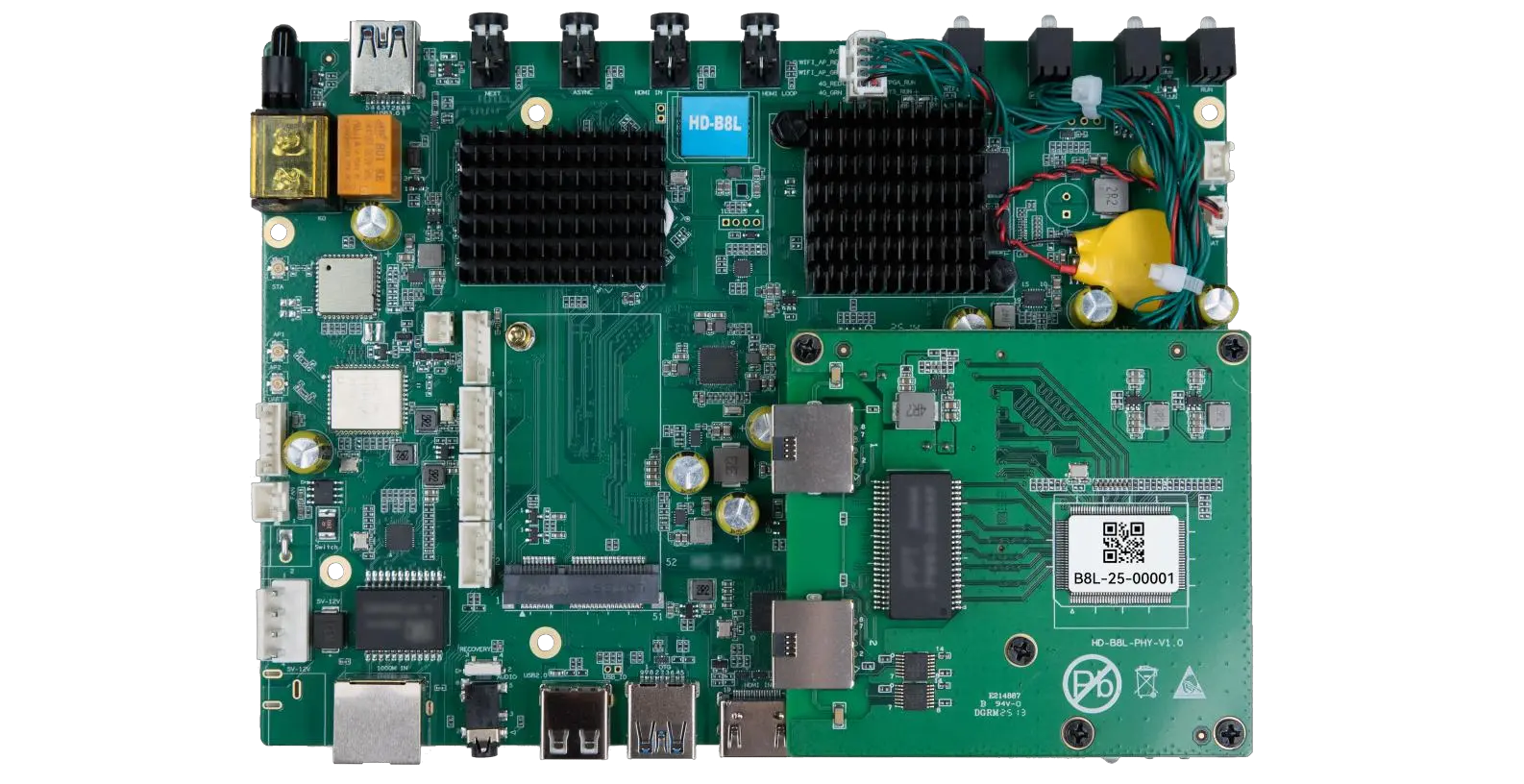
The HD-B8L Poster Screen Control System is an Android-based LED display controller designed for commercial LED poster displays and digital signage. It integrates media playback, asynchronous LED control, HDMI synchronization, network communication, and cloud management into one device, simplifying installation and centralized content management.
What Is the HD-B8L Poster Screen Control System? A Complete Technical Guide for Commercial LED Displays
Tell Us What Are You Looking For?
