
How to Choose Exhibition LED Display Without Waste: Parameters & Scenarios Guide 2026
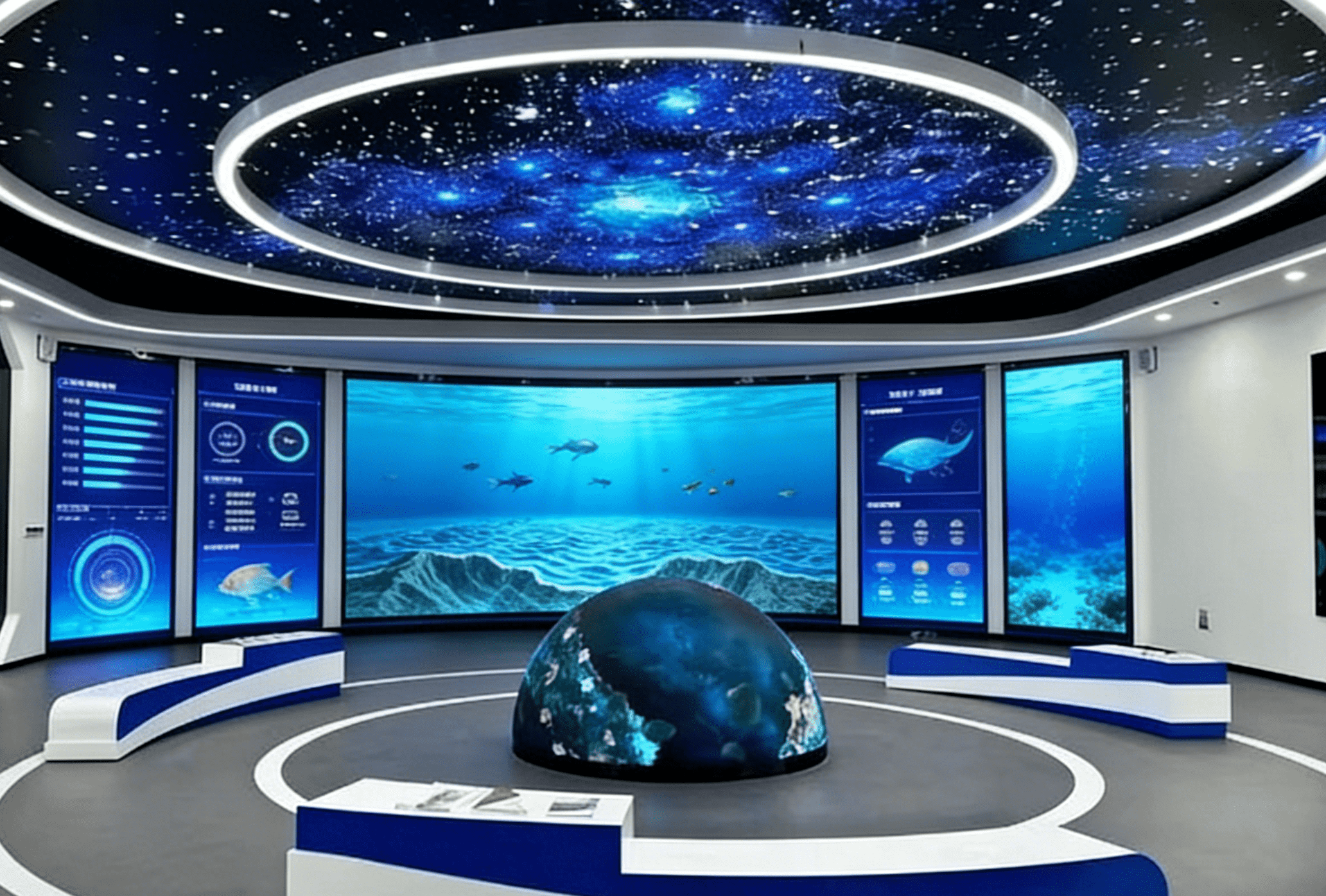
Table of Contents
1.Why Choosing the Right Exhibition LED Display Matters?
2.Step 1: Define Scenarios & Viewing Distance First
3.Key Parameters for Exhibition LED Display Selection
4.COB vs SMD: Which Technology Fits Your Exhibition?
5.Scenario-Based Exhibition LED Display Recommendations
6.Cost-Saving Tips for LED Screen Exhibition
7.FAQs About Choosing Exhibition LED Display
8.Conclusion: Match Parameters to Scenarios for Optimal Value
1. Why Choosing the Right Exhibition LED Display Matters?
An Exhibition LED Display is the core equipment for showcasing brand image, delivering product information, and creating immersive experiences in digital exhibition halls.
Choosing an ill-fitted LED Screen Exhibition not only wastes budget but also undermines visual effects and audience engagement—making scenario-parameter matching critical.
2. Step 1: Define Scenarios & Viewing Distance First
Clarify the primary use of the Exhibition LED Display and the average viewing distance to avoid over-investing in unnecessary specs.
Use the formula: Recommended viewing distance ≈ pixel pitch (mm) × 1–1.5 to balance clarity and cost.
|
Exhibition Scenario |
Average Viewing Distance |
Core Requirement |
|
Brand image display (small booth ≤20㎡) |
1.5–3m |
High definition for close-up viewing |
|
Product detail presentation (tech/auto exhibition) |
2–4m |
Fine pixel pitch for 3D model/part display |
|
Information broadcasting (large hall ≥100㎡) |
5–8m |
Balanced resolution and cost |
|
Background atmosphere rendering (event hall) |
4–6m |
Wide viewing angle and vivid colors |
|
Interactive experience (digital exhibition) |
1–2.5m |
Touch functionality and low latency |
3. Key Parameters for Exhibition LED Display Selection
3.1 Pixel Pitch & Resolution
Pixel pitch is the key to clarity—the smaller the value, the denser the pixels and the finer the image.
For close viewing (≤3m), choose P1.2–P2.5; for medium-to-long distances (3–8m), P2.5–P4 is sufficient to avoid waste .
3.2 Brightness & Color Performance
Exhibition halls have complex lighting—Exhibition LED Display brightness should be 800–1500nits to ensure visibility without glare.
Opt for screens with HDR support and 16-bit grayscale for accurate color reproduction, especially for high-end product displays .
3.3 Refresh Rate & Stability
A refresh rate ≥3840Hz ensures flicker-free visuals, critical for photo/video shooting at LED Screen Exhibition .
Choose products with stable power supply systems to avoid blackouts during important demonstrations.
3.4 Protection & Maintenance
Indoor Exhibition LED Display should have at least IP54 protection for dust resistance, with modular design for easy module replacement.
Prioritize manufacturers offering 1–3 year warranties and responsive after-sales service .
4. COB vs SMD: Which Technology Fits Your Exhibition?
The choice between COB and SMD technologies directly impacts the Exhibition LED Display’s performance and cost.
|
Technology |
Advantages |
Disadvantages |
Suitable Scenarios |
|
COB (Chip on Board) |
Higher pixel density, better heat dissipation, IP65 protection |
Higher upfront cost |
Long-term fixed exhibitions (brand halls, museums) |
|
SMD (Surface-Mounted Device) |
Cost-effective, flexible pixel pitches, easy maintenance |
Lower durability for close viewing |
Temporary exhibitions, rental booths, large-scale events |
For long-term stable operation, COB is ideal; for budget-limited or temporary LED Screen Exhibition, SMD offers better cost-efficiency.
5. Scenario-Based Exhibition LED Display Recommendations
5.1 Small Exhibition Booth (≤20㎡)
Choose P1.5–P2.5 Exhibition LED Display with 800–1000nits brightness and 3840Hz refresh rate.
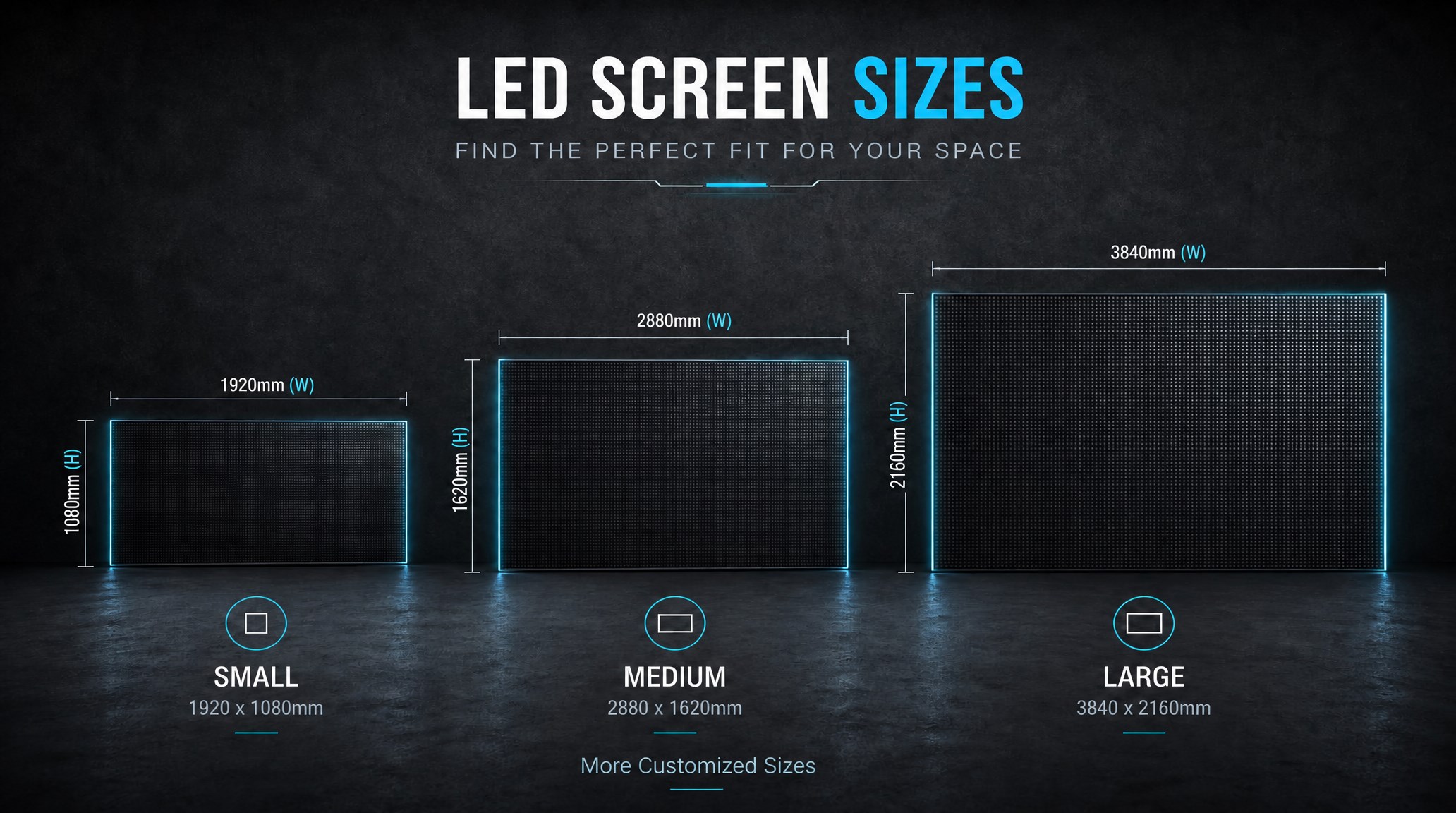
Size recommendation: 4m×2.25m (16:9 ratio) for brand video and product slides .
5.2 Tech/Auto Exhibition (Product Detail Display)
Opt for P1.2–P1.8 COB Exhibition LED Display to showcase 3D models, internal structures, or test videos.
Add touch functionality for interactive product exploration .
5.3 Large Exhibition Hall (≥100㎡)
Select P2.5–P3.9 Exhibition LED Display with 1000–1200nits brightness and wide viewing angle (160°+).
Curved screens with curvature radius ≥1.5×screen width enhance immersion .
5.4 Interactive Digital Exhibition
Choose touch-enabled P1.8–P2.5 Exhibition LED Display with low latency (≤10ms) and cloud content management.
Support gesture recognition for dynamic audience engagement .
6. Cost-Saving Tips for LED Screen Exhibition
Avoid blind pursuit of ultra-small pixel pitches (P1.0 or below) if viewing distance exceeds 3m—P2.5 is sufficient for most scenarios.
Select common cathode energy-saving technology, reducing power consumption by 45–60% compared to traditional anode technology .
Opt for modular Exhibition LED Display for easy expansion or replacement, avoiding full-screen replacement costs.
Rent instead of buying for temporary events (e.g., trade shows, pop-up exhibitions) to cut upfront investment .
7. FAQs About Choosing Exhibition LED Display
Q1: What is the ideal brightness for an indoor Exhibition LED Display?
A1: 800–1000nits for general indoor halls; 1200–1500nits for bright environments (glass curtain wall booths) .
Q2: Can I use the same Exhibition LED Display for different exhibitions?
A2: Yes—choose modular, lightweight models (≤15kg/m²) for easy transportation and quick installation across events .
Q3: Is COB technology worth the extra cost for LED Screen Exhibition?
A3: Yes if the exhibition is long-term (≥1 year) or requires close-up viewing—its durability and clarity reduce maintenance costs .
Q4: How to ensure the Exhibition LED Display’s resolution matches content?
A4: Select physical resolution compatible with common signal sources (1080P/4K) to avoid image stretching or distortion .
Q5: What energy efficiency standard should I follow?
A5: Comply with GB 21520-2023 (Level 1–2 recommended) to reduce long-term energy costs .
8. Conclusion: Match Parameters to Scenarios for Optimal Value
Choosing an Exhibition LED Display without waste boils down to one core principle: align key parameters (pixel pitch, brightness, technology) with your specific exhibition scenario.
Avoid over-specifying for distant viewing or under-investing in close-up product displays—let usage and distance guide your choices.
An optimally selected LED Screen Exhibition balances visual impact, usability, and cost, turning your exhibition space into a powerful brand communication tool.
By following the scenario-parameter matching method, you’ll maximize budget value while creating memorable experiences for visitors.
Minimizing LED Screen Splicing Gaps: 2026 Seamless Display Technical Handbook
Flexible LED Display Module: The Ultimate Guide to Features, Applications & Installation
Related Article
Tell Us What Are You Looking For?
