
How Do 3D Billboards Work? Technology, Illusions & More
2025-08-08
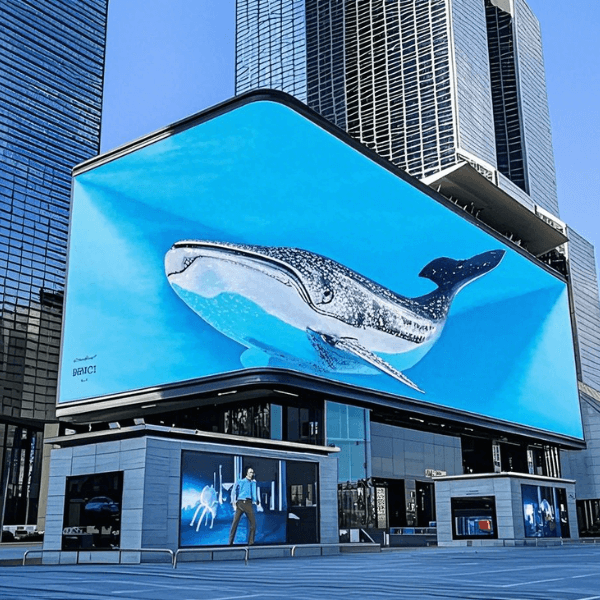
How Do 3D Billboards Work? Technology, Illusions & More
In recent years, 3D billboards have become a standout feature in urban landscapes, captivating passersby with seemingly floating objects, bursting characters, and immersive scenes that appear to leap from flat screens. But what makes these 3D digital billboards work? Behind their eye-catching magic lies a smart mix of cutting-edge technology and an understanding of human perception. Let’s break down the key mechanics of 3D billboards.
At their core, 3D billboards aren’t truly "3D" in the physical sense—they don’t project tangible, three-dimensional objects into space. Instead, 3D LED billboards harness optical illusions and advanced display technology to trick our brains into perceiving depth where there’s only a flat surface. This illusion relies heavily on how human vision processes light, perspective, and motion—key factors in making 3D billboards effective.
The Role of Display Hardware in 3D Billboards
The first critical element is the display hardware. Unlike traditional 2D billboards, 3D billboards often use high-resolution LED screens with exceptional brightness and contrast. This is crucial because 3D digital billboards need to stand out in varying lighting conditions—from bright daylight to nighttime—and maintain clarity when creating depth effects. Some advanced 3D LED billboards setups even curve the screen slightly or use multiple panels at angles to enhance the perception of space, a technique that’s become a hallmark of how 3D billboards work.
Content Design: Crafting the 3D Illusion
Next comes the content design, which is where the "3D" magic of 3D billboards is truly crafted. Artists and animators use techniques like anamorphosis—distorting images so they appear normal only from a specific viewing angle. For example, a character on a 3D digital billboard might be drawn with exaggerated proportions, but when seen from the intended spot on the street, the distortion corrects itself, making the figure look like it’s stepping out of the screen. This careful design is what makes 3D billboards feel so lifelike.
Motion is another key tool in 3D billboard technology. By synchronizing animations with subtle shifts in perspective, 3D billboards create the illusion of objects moving toward or away from the viewer. A car might "zoom" forward, or a liquid might "pour" out of the screen—these movements trigger our brain’s natural ability to interpret motion as a sign of depth, just like how we perceive distance in real life when something approaches us. This dynamic element is a big reason why 3D LED billboards are more engaging than traditional ads.
Interactivity: Taking 3D Billboards Further
Some 3D billboards take it a step further with interactivity or environmental integration. Sensors in 3D digital billboards can detect the movement of pedestrians, adjusting the content in real time to make it seem like the billboard is responding to the viewer’s position. For instance, a character might turn its head to "look" at someone walking by, enhancing the sense of immersion. This interactivity adds another layer to how 3D billboards work, making them more memorable.
Viewing Angle: A Key Factor for 3D Billboards
It’s important to note that the effectiveness of a 3D billboard depends heavily on viewing angle. The illusion works best when the viewer is positioned in a specific spot—usually straight on or at a carefully calculated angle. From other positions, the image on a 3D LED billboards might appear distorted or lose its 3D effect entirely, which is why these 3D billboards are often placed in high-traffic areas with predictable pedestrian flow.
In summary, 3D billboards—whether 3D LED billboards or other 3D digital billboards—combine high-tech displays, cleverly designed content, and an understanding of human perception to create the illusion of depth. They don’t actually project 3D objects but use a mix of perspective, motion, and timing to make flat images feel like they’re leaping into the real world. Now that you know how 3D billboards work, you’ll likely notice their clever tricks the next time you pass one in the city.
What Is a Jumbotron Screen? A Complete Guide to Large-Format LED Display
The "Smart Brain" of LED Displays: Essential Guide to Video Processors
Related Article
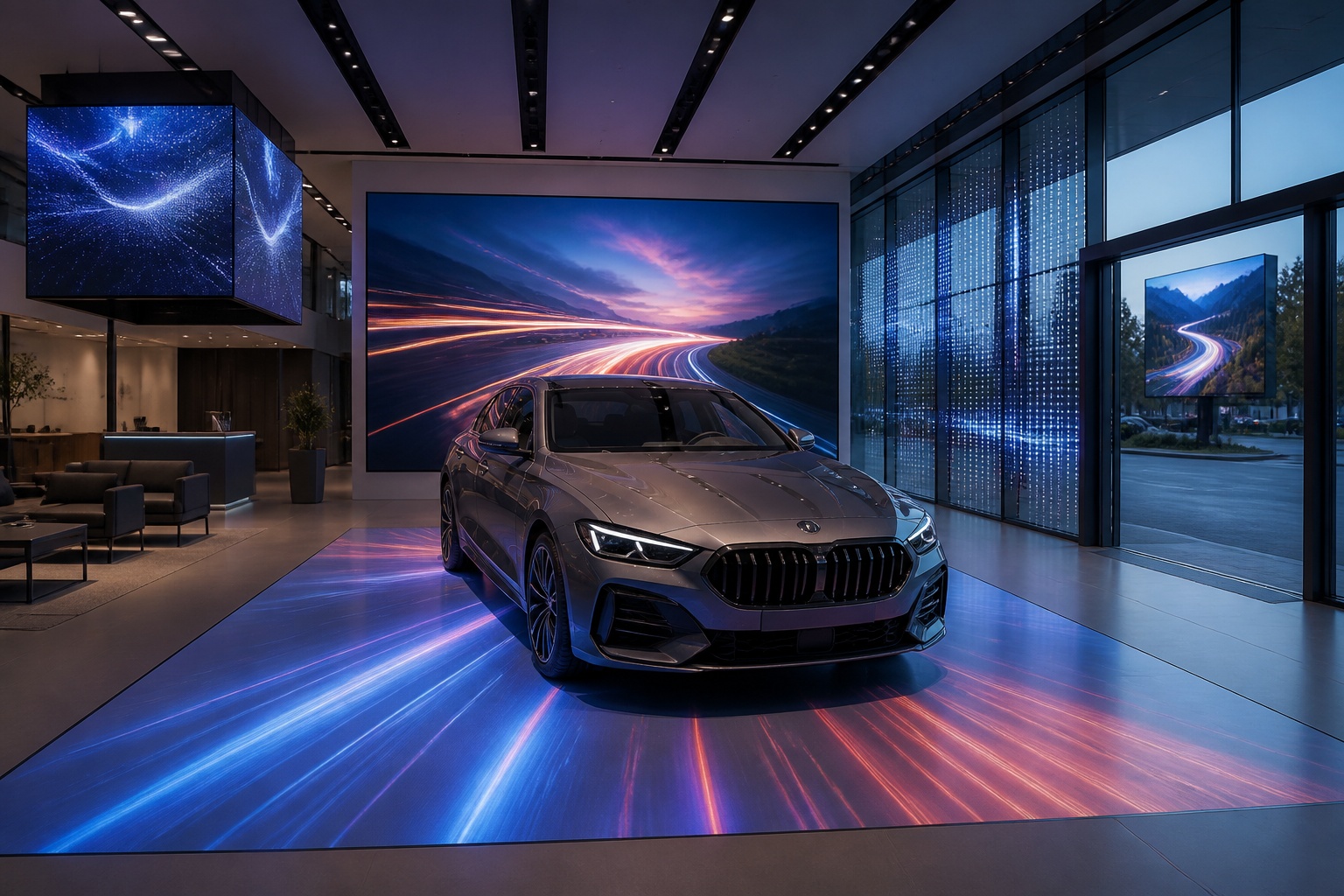
A B2B technical guide to selecting and combining fixed, floor, transparent, cube and other LED displays for automotive dealerships and 4S showrooms.
What LED Displays Can a 4S Dealership Use and How Should They Be Combined?
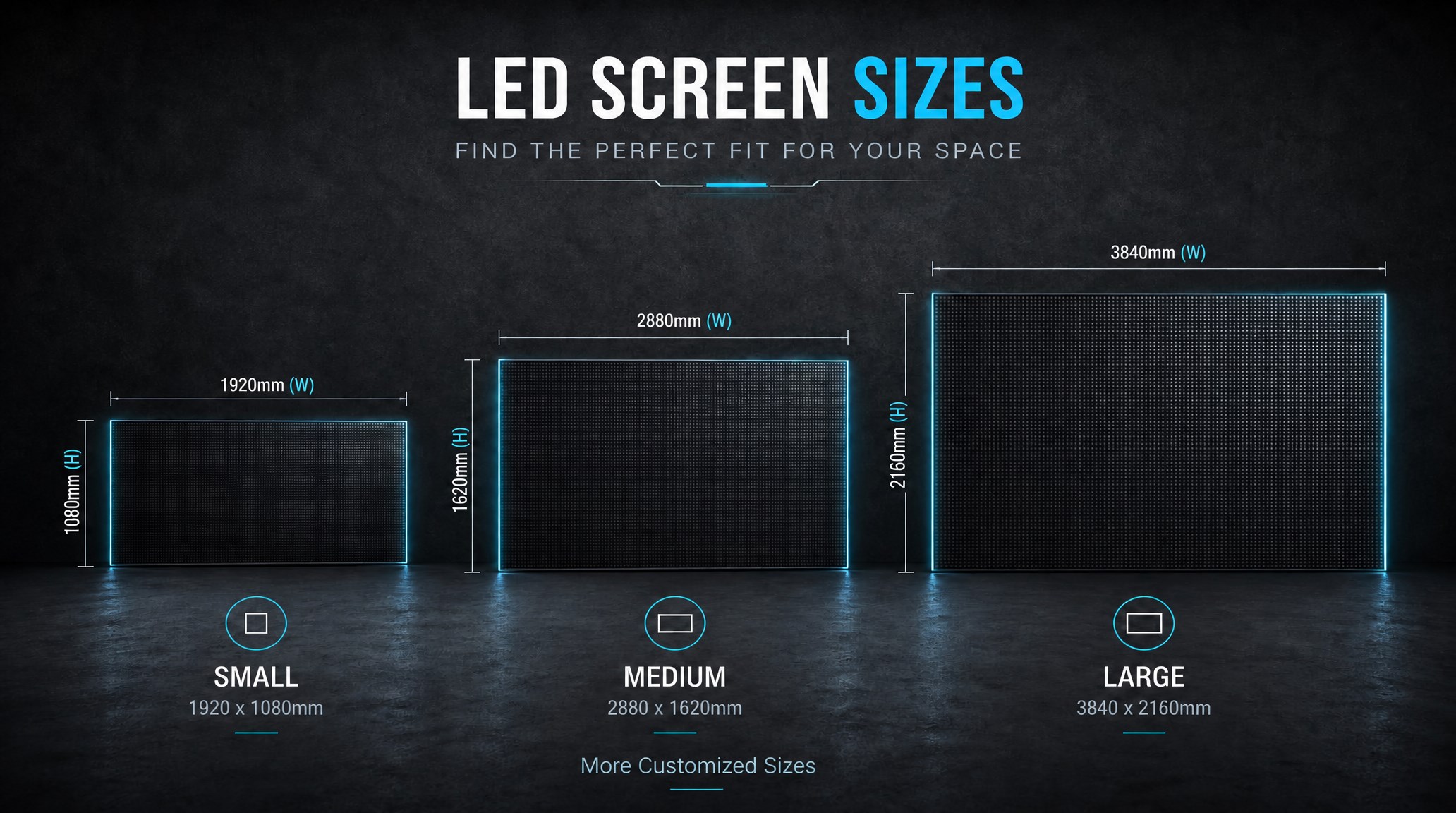
A practical guide explaining how to calculate LED display size, select pixel pitch, determine viewing distance, and choose suitable LED wall dimensions for commercial projects.
How to Choose the Right LED Display Size? Complete LED Screen Size Guide
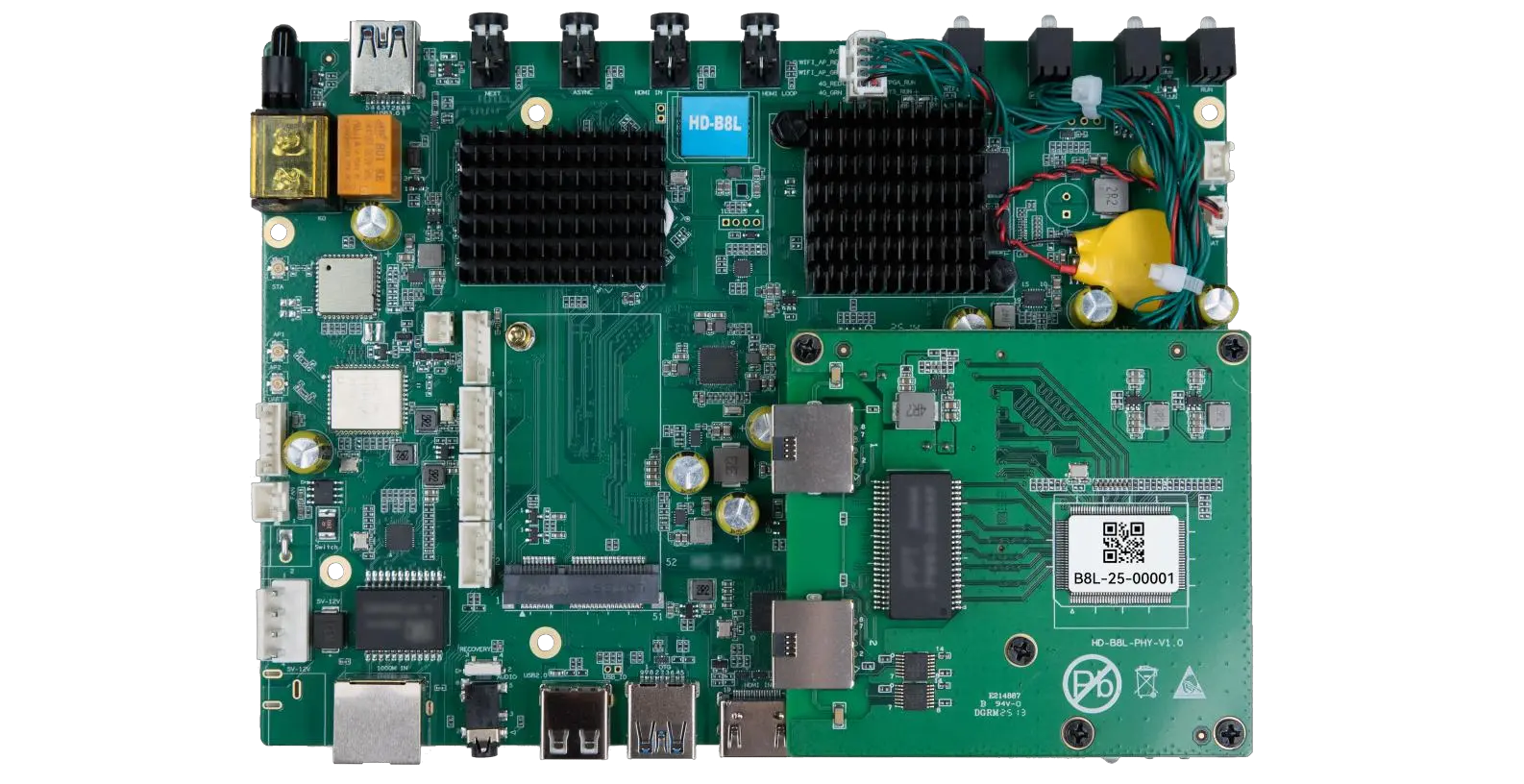
The HD-B8L Poster Screen Control System is an Android-based LED display controller designed for commercial LED poster displays and digital signage. It integrates media playback, asynchronous LED control, HDMI synchronization, network communication, and cloud management into one device, simplifying installation and centralized content management.
What Is the HD-B8L Poster Screen Control System? A Complete Technical Guide for Commercial LED Displays
Tell Us What Are You Looking For?
