
Can You Lay a LED TV Flat in Original Box? Expert Guide 2025
2025-10-20
Can You Lay a LED TV Flat in Original Box? Expert Guide 2025
If you’ve ever moved house or needed to store your LED TV, you’ve probably asked: Can you lay a LED TV flat in original box? It’s a common question driven by practicality—flat storage or transport might seem easier, but LED TVs are delicate devices with specific handling requirements. In this guide, we’ll break down the facts, risks, and best practices to keep your LED TV safe, whether you’re moving across town or storing it for months.
Can You Lay a LED TV Flat in Original Box? The Straight Answer
The short answer: No, you should not lay a LED TV flat in its original box—unless the manufacturer explicitly states it’s safe. Most LED TV brands, including Samsung, LG, Sony, and TCL, design their packaging and panels to support the TV’s weight when it’s upright. Even in the original box,laying flat can put excessive pressure on the screen and internal components, leading to permanent damage.
This rule applies to both new and used LED TVs. The original box provides protection against scratches and minor impacts, but it’s not engineered to distribute the TV’s weight evenly when flat. To understand why, let’s look at what makes LED TV screens so vulnerable.
Why Laying a LED TV Flat Risks Damage
LED TVs use thin, lightweight panels—typically LCD (liquid crystal display) with LED backlighting or newer OLED (organic light-emitting diode) technology. Both panel types have specific weaknesses when subjected to flat placement:
1. Screen Pressure and Distortion
An LED TV’s screen is held together by a thin bezel and internal brackets. When laid flat, the entire weight of the TV (which can range from 10kg for a 32-inch model to 30kg+ for a 75-inch TV) presses down on the center of the screen. Over time—even just a few hours—this pressure can distort the liquid crystal layers in LCD panels or damage the delicate OLED pixels. The result? Dead pixels, color discoloration, or a “bulging” spot in the screen that’s impossible to fix.
2. Backlight Component Stress
LCD-based LED TVs rely on a backlight array (usually edge-lit or direct-lit) to illuminate the screen. These backlights are made of fragile LEDs and diffuser panels. When the TV is flat, the weight can shift the backlight components out of alignment, causing uneven brightness (known as “backlight bleeding”) or even complete backlight failure. OLED TVs don’t have a backlight, but their self-emissive pixels are still sensitive to pressure—pressing too hard on an OLED screen can kill individual pixels instantly.
3. Packaging Limitations
Original LED TV boxes come with foam inserts designed to cradle the TV when it’s upright. These inserts have cutouts for the base stand and screen edges, but they don’t provide support for the center of the screen when flat. If you lay the box on its side, the foam can compress, leaving the screen vulnerable to flexing. Even stacking light items on top of a flat TV box (like a small suitcase during a move) can amplify the pressure and cause damage.
The Correct Way to Place a LED TV in Its Original Box
To keep your LED TV safe in its original box, follow these steps:
-
Keep the TV upright at all times: When removing the TV from use or unboxing a new one, hold it vertically by the edges (never the screen). Avoid tilting it more than 45 degrees.
-
Reuse all original packaging: Ensure you have the bottom foam insert, top foam insert, and plastic screen protector. If any parts are missing (e.g., the foam broke during a previous move), buy replacement foam from the manufacturer or use sturdy cardboard to create support.
-
Secure the TV in the box: Place the TV upright in the bottom foam, making sure the screen faces the side of the box with the least pressure (usually the side labeled “front”). Attach any included straps or clips to hold the TV in place. Add the top foam insert and seal the box with packing tape—reinforce the corners and edges for extra stability.
LED TV Transport: Flat vs. Upright
Transporting a LED TV is where many people make mistakes. Whether you’re using a car, truck, or moving van, always transport the LED TV in its original box upright—never flat on the floor or seats.
Here’s how to transport it safely:
-
Secure it against movement: In a car, place the box in the backseat or trunk and wedge it between pillows or blankets to prevent sliding. In a moving van, use straps to anchor the box to the wall (avoid strapping directly to the TV screen).
-
Avoid stacking heavy items: Never put boxes of books, furniture, or other heavy objects on top of the LED TV box—even if it’s upright. The weight can crush the box and damage the TV.
-
Control temperature: Don’t leave a LED TV in a hot car or freezing truck for extended periods. Extreme temperatures can damage the screen and internal circuits. If moving in extreme weather, transport the TV in a climate-controlled vehicle if possible.
Storing a LED TV in Original Box: Best Practices
If you need to store your LED TV for weeks or months, the original box is still the best option—but only if stored upright. Follow these storage tips:
-
Choose a dry, cool location: Store the box in a basement, closet, or storage unit with low humidity (below 60%) and a temperature between 10°C and 30°C. Avoid damp areas (which can cause mold) or direct sunlight (which fades the screen).
-
Elevate the box: Place the box on a pallet or sturdy shelf to keep it off the floor. This protects it from water damage (e.g., leaks) and pests.
-
Check on it periodically: Every few months, inspect the box for damage, moisture, or pest infestations. If the box is crushed or wet, repack the TV in a new box with fresh foam.
Common Myths About Laying LED TVs Flat Debunked
Let’s clear up some misconceptions about laying LED TVs flat:
Myth 1: “The original box is strong enough to lay it flat.”
False. Original boxes are designed for upright support, not flat weight distribution. Even thick cardboard can’t prevent screen flexing under the TV’s own weight.
Myth 2: “I’ve laid my LED TV flat before and it was fine.”
Luck doesn’t equal safety. Damage from flat placement can be gradual—you might not notice dead pixels or backlight bleeding until weeks later. OLED TVs are especially risky, as pixel damage is often permanent.
Myth 3: “Only large LED TVs can’t be laid flat—small ones are safe.”
False. Even 32-inch LED TVs have delicate panels. While smaller TVs are lighter, their screens are still vulnerable to pressure. The rule applies to all LED TV sizes.
Conclusion: Protecting Your LED TV
To answer the question “Can you lay a LED TV flat in original box?” clearly: No. LED TVs are engineered to be stored and transported upright, and even the original packaging can’t protect them from the pressure of flat placement. The risk of screen damage, backlight failure, or pixel death is simply too high.
By following the best practices outlined here—keeping the LED TV upright in its original box, securing it during transport, and storing it in a dry, cool location—you’ll ensure your TV stays in perfect condition for years. Remember: When in doubt, check your TV’s user manual—manufacturers always include specific handling instructions for their models.
COB Technology: A New Breakthrough in the LED Display Industry
Related Article

A B2B technical guide to selecting and combining fixed, floor, transparent, cube and other LED displays for automotive dealerships and 4S showrooms.
What LED Displays Can a 4S Dealership Use and How Should They Be Combined?
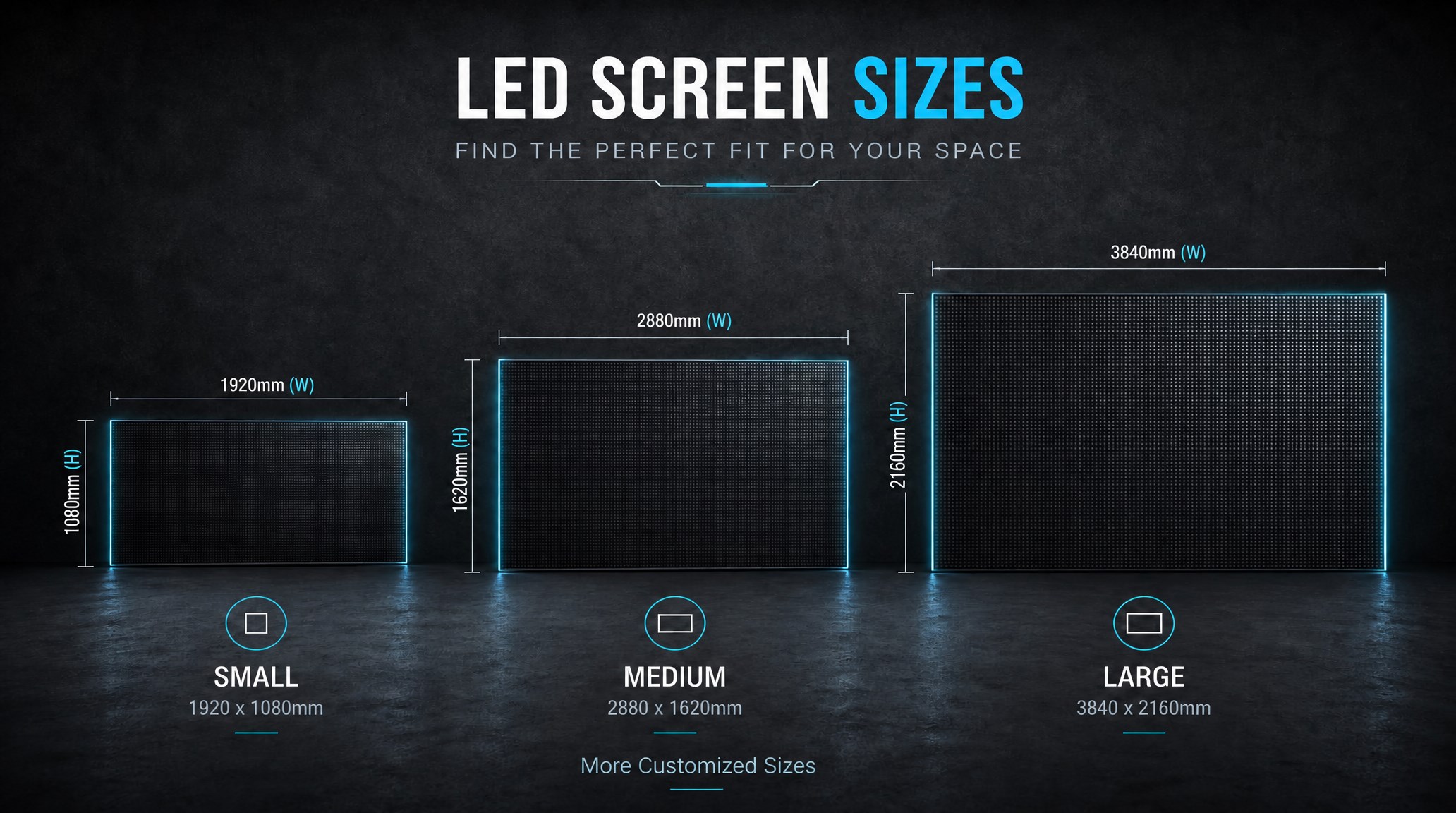
A practical guide explaining how to calculate LED display size, select pixel pitch, determine viewing distance, and choose suitable LED wall dimensions for commercial projects.
How to Choose the Right LED Display Size? Complete LED Screen Size Guide

The HD-B8L Poster Screen Control System is an Android-based LED display controller designed for commercial LED poster displays and digital signage. It integrates media playback, asynchronous LED control, HDMI synchronization, network communication, and cloud management into one device, simplifying installation and centralized content management.
What Is the HD-B8L Poster Screen Control System? A Complete Technical Guide for Commercial LED Displays
Tell Us What Are You Looking For?
